


Revision Facelift
- 30% of Dr De Silva’s surgeries are Facelift & Neck Lift Revisions
- Focus on Natural results with signature Vertical Face Restore 7
- Author of The Facelift & Neck LIft Book
What Is A Revision Facelift?
A revision facelift is a specialised surgical procedure designed to address unsatisfactory results or complications from a previous facelift. It aims to refine and improve the outcome, restoring a natural, balanced appearance while correcting concerns such as asymmetry, visible scarring, unnatural tightness, or persistent sagging.
Revision facelift surgery requires advanced techniques and precision that go beyond a primary procedure. Because the facial tissue and anatomy have already been altered by earlier surgery, there is a degree of scarring and anatomical change that must be carefully assessed and worked around. Whether the initial surgery fell short of expectations, the technique was poorly suited to your anatomy, or natural ageing has continued to affect the result, a revision facelift performed by a specialist such as Dr De Silva, offers a genuine opportunity for meaningful improvement.
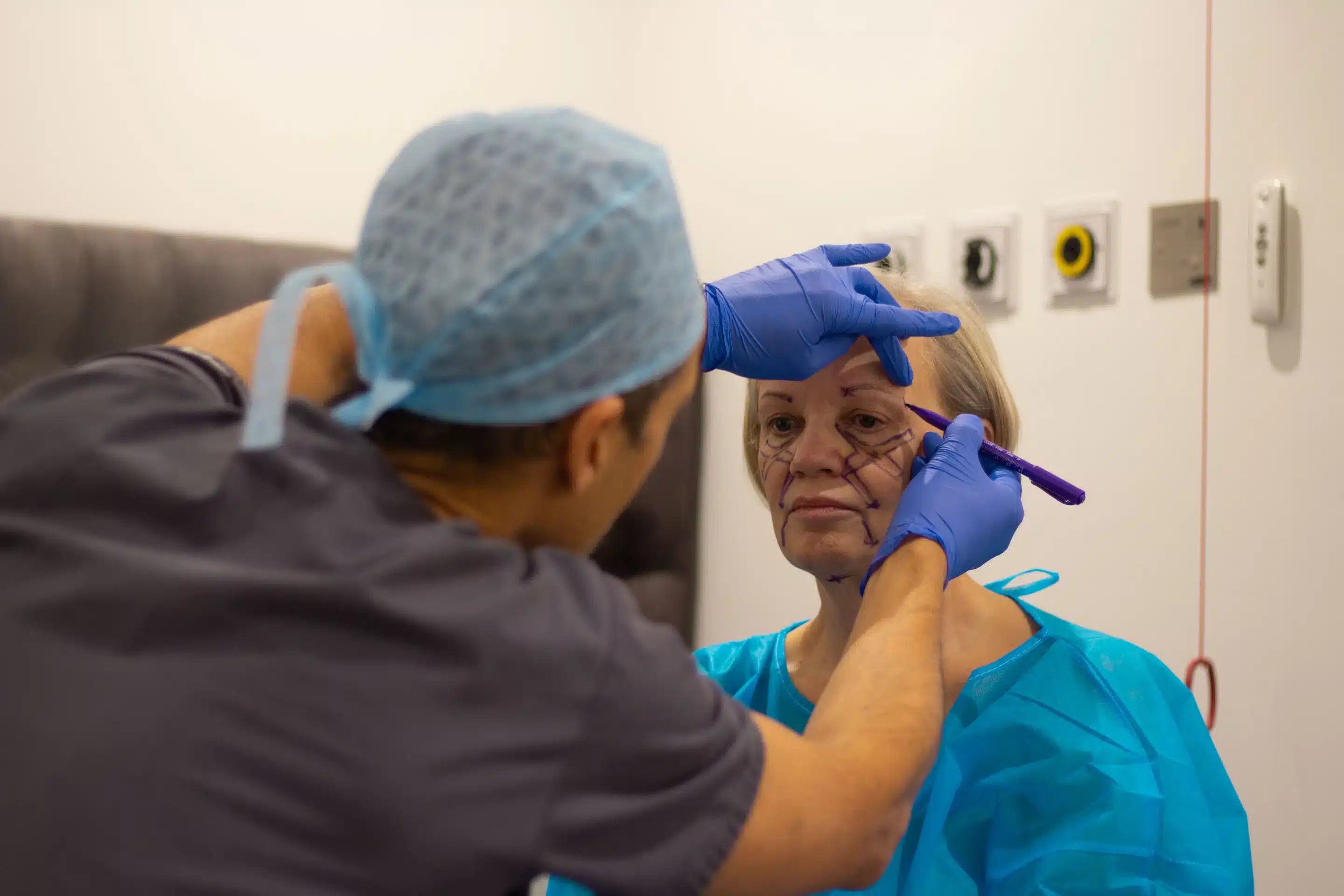
This specialised procedure, performed by board-certified facial plastic surgeon Dr De Silva, is built around restoring confidence and achieving results that look naturally your own. A key part of Dr De Silva's approach is reviewing old photographs of each patient to understand how their individual face has changed over time, using that as a personal template to guide the revision surgery.
Why Our Harley Street Patients Seek Facelift Revision Surgery
Loose skin, fullness in the neck, deep facial lines, a tired appearance and unsatisfactory scarring are some of the common reasons patients seek revision facelift surgery. While most of these concerns are minor and can be corrected, they may occur even in skilled hands due to individual healing processes, which play a crucial role in facial surgery outcomes. Dr De Silva addresses these issues with his specialised revision facelift surgery in World Renowned Harley Street, London. Many patients travel internationally and nationally for revision procedures.
Correcting Tightness and Structural Imbalance
Deformity from skin tension after facelift surgery occurs when excessive pulling distorts natural contours, leading to an unnatural, tight appearance. Other signs include earlobe distortion and lack of tragal definition. Revision surgery restores balance, ensuring a smoother, more natural result.
Correcting Shape and Symmetry Issues
When the lift direction is backwards instead of upwards, the face can appear windswept and overly tight in the mid-face. Unreleased deeper ligaments may cause a bulging lateral sweep deformity, which becomes more pronounced during animation or smiling.
Poor Incision Placement
Poorly placed facelift incisions can negatively affect the hairline around the ear. A scar extending vertically into the hairline in front of the ear can restrict vertical lift and risk loss of the temporal tuft (sideburn).
Scarring
Poorly placed or noticeable scars can detract from the natural results of a facelift, drawing unwanted attention and causing dissatisfaction. Issues such as thickened scars, visible incisions in the hairline, or irregularities like triangular notches can disrupt facial harmony. As part of a revision facelift, Dr De Silva aims to reduce existing scarring and achieve a more natural result. Expectations are key as scarring can be improved, but not completely removed, as genetics also plays a role in the healing of scars.
Interested in a Face & Neck Lift REVISION in London? Discover Our Patient Results
Dr De Silva avoids a “one-size-fits-all” approach, focusing instead on subtle enhancements that bring out your best features while addressing areas of concern. Discover our real-life patient transformations.
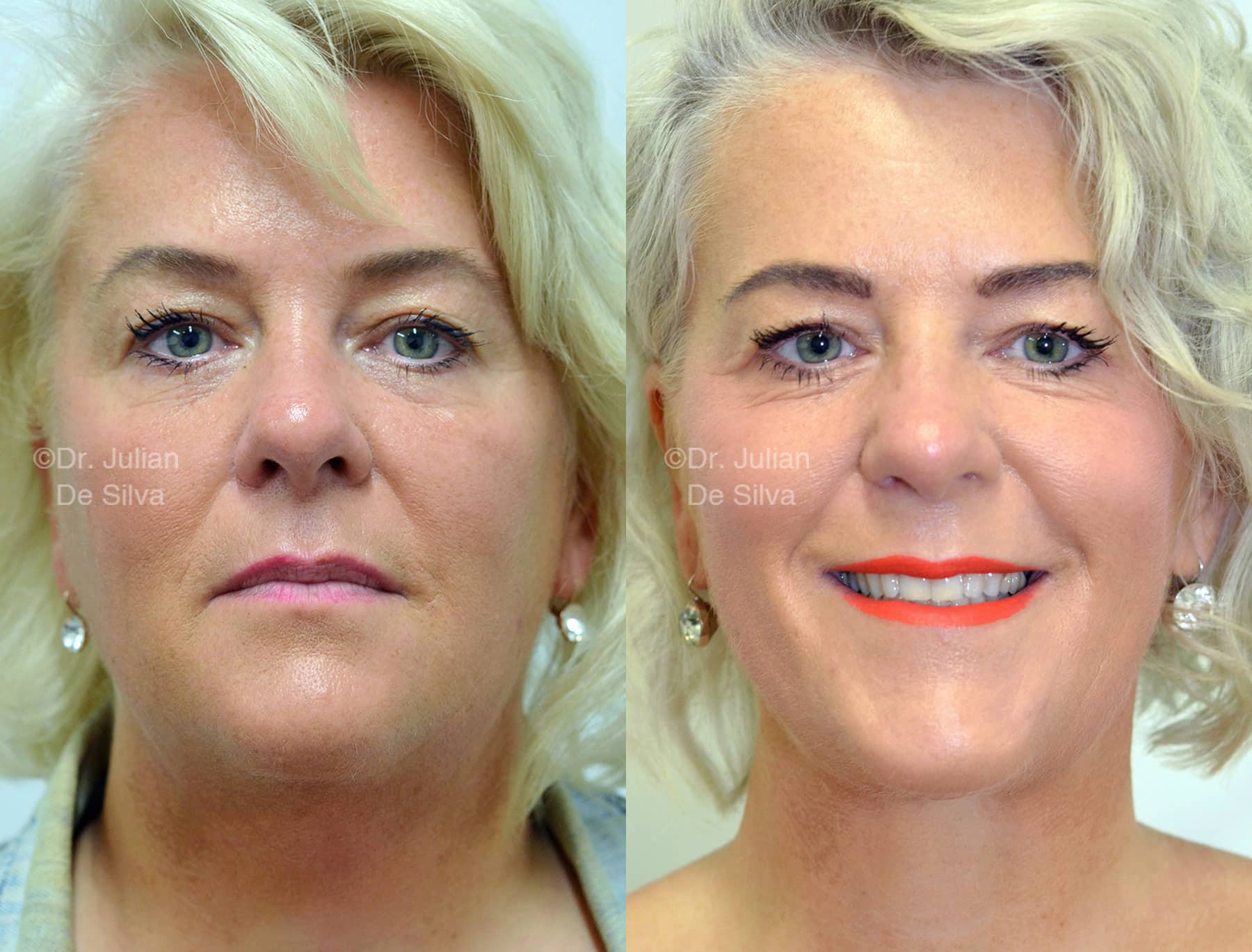
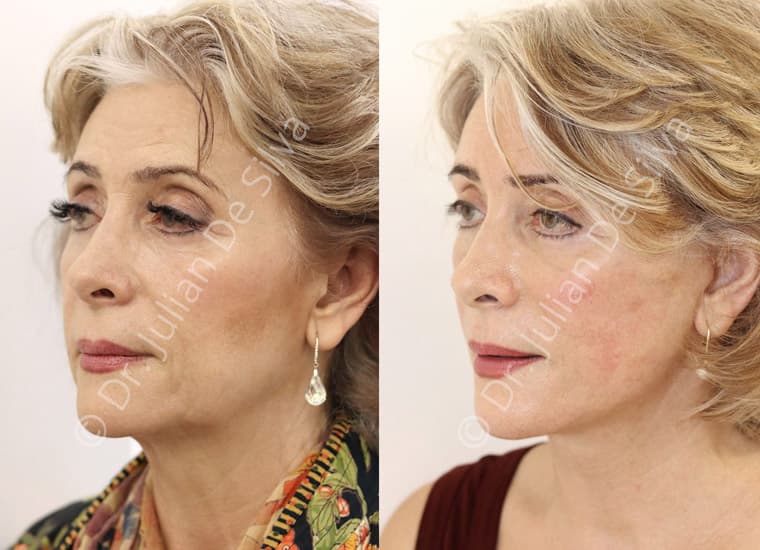
“I wanted to look like myself—just fresher, more confident, and ten years younger.” This patient had disliked her neck since her 20s and found it looked better after surgery than even in her teens. Dr. Julian De Silva performed a vertical deep plane facelift with his signature deep neck surgery, including reduction of genetic subplatysmal fat and the submandibular salivary glands, to achieve a refined, natural result.
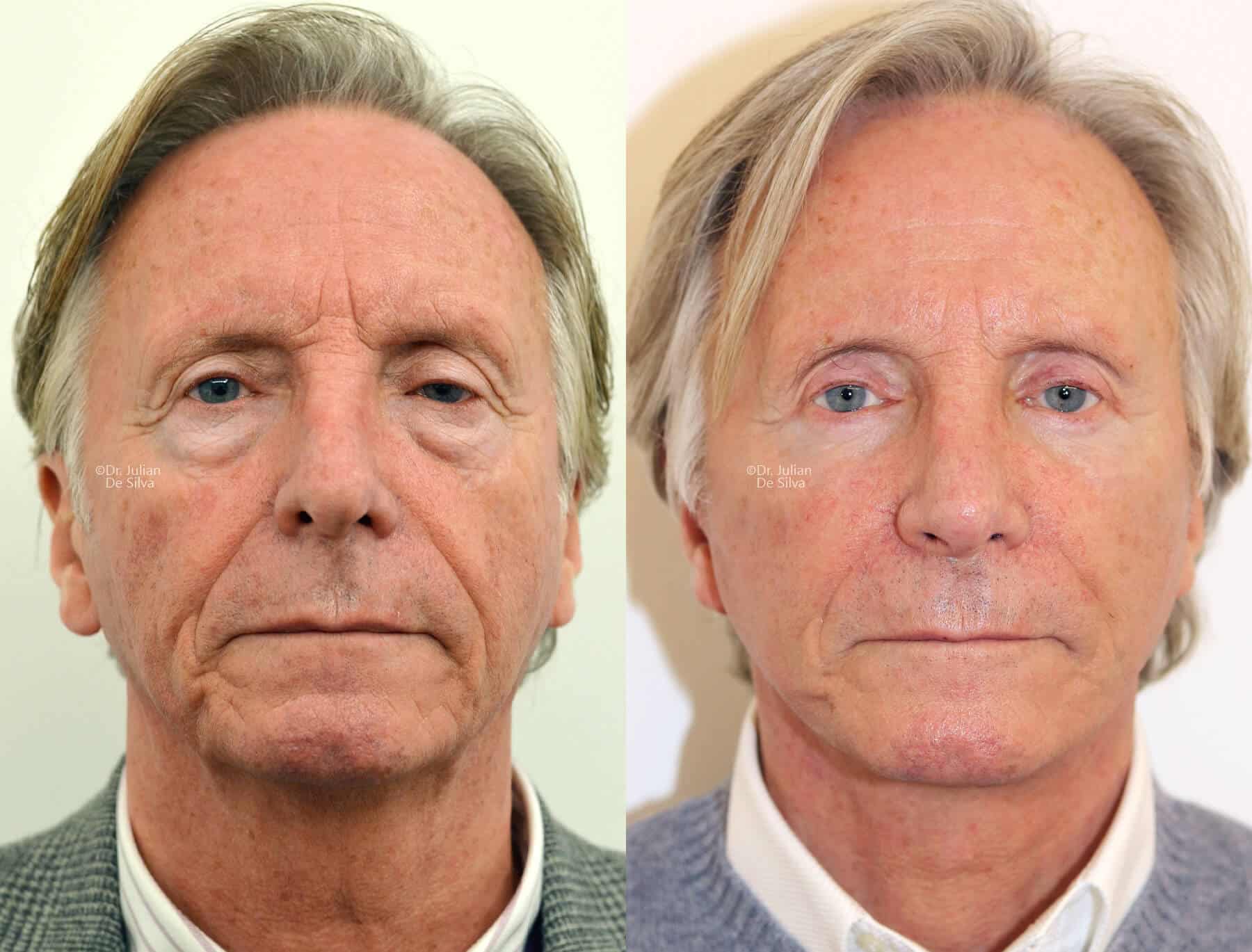
“I was tired of looking tired. Now my face reflects how I feel—it’s made such a difference.” This patient followed a phased treatment plan with Dr. De Silva over several years, including ptosis eyelid surgery, volume restoration, and a vertical deep plane facelift.
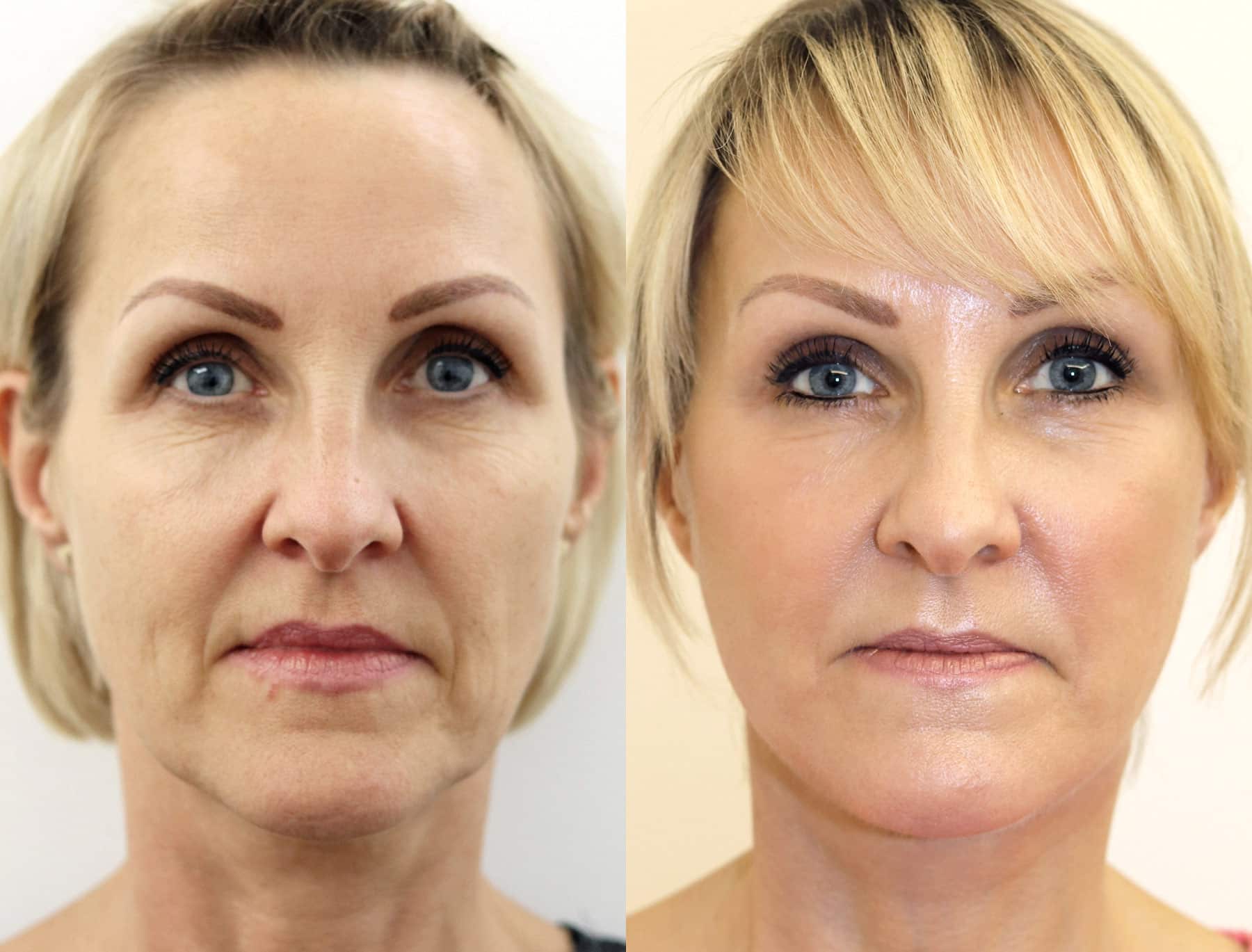
I saw this beautiful patient just 8 weeks after her facelift, and she looks fabulous. Using a customized deep plane facelift, neck lift with platysmaplasty, upper and lower blepharoplasty, and laser resurfacing with regenerative medicine, we restored her jawline, softened lines, and refreshed her eyes and skin—creating a natural, heart-shaped facial contour.
“I wanted to look like myself—just fresher, more confident, and ten years younger.” This patient had disliked her neck since her 20s and found it looked better after surgery than even in her teens. Dr. Julian De Silva performed a vertical deep plane facelift with his signature deep neck surgery, including reduction of genetic subplatysmal fat and the submandibular salivary glands, to achieve a refined, natural result.
“I was tired of looking tired. Now my face reflects how I feel—it’s made such a difference.” This patient followed a phased treatment plan with Dr. De Silva over several years, including ptosis eyelid surgery, volume restoration, and a vertical deep plane facelift.
I saw this beautiful patient just 8 weeks after her facelift, and she looks fabulous. Using a customized deep plane facelift, neck lift with platysmaplasty, upper and lower blepharoplasty, and laser resurfacing with regenerative medicine, we restored her jawline, softened lines, and refreshed her eyes and skin—creating a natural, heart-shaped facial contour.
Why Choose Dr. De Silva As Your Revision Facelift Specialist?
Many patients feel apprehensive about revision surgery, often due to unsatisfactory results from a previous procedure and concerns about undergoing further treatment. Dr Julian De Silva, a highly regarded facial cosmetic and plastic surgeon, specialises in revision surgery and is dedicated to achieving natural-looking outcomes that restore your confidence and satisfaction.
With over 20 years of experience and expert training in London, New York, and Los Angeles, Dr De Silva combines pioneering techniques with an artistic approach to deliver balanced and harmonious results. As a Director of the ASOPRS Facelift and Neck Lift Course and operating from a CQC-accredited Harley Street clinic, he is committed to excellence in patient care.
Dr De Silva takes the time to discuss every aspect of the revision process, offering thorough explanations, recovery guidance, and emotional support before and after surgery. By personalising each treatment to the unique needs of his patients, he fosters long-term relationships, ensuring ongoing care for years to come.
- Known for ‘Natural’ signature facial surgery
- Specialises Face Only surgery, does not operate on the body
- Author of 3 Books on Facial Surgery
- Board Certified by the American College of Surgeons and British Royal College Societies
- Facelift Educator at the American Academy International Meeting
- Over 1000 5-star reviews from patients
Read What Our Satisfied Patients Say About Us
Excellent results from Dr. de Silva and the entire team. The level of care, the treatment itself, support during recovery and post-op review were top notch.
- George Flourentzos
Discover More About Your London Revision Facelift Surgery
Dr. De Silva is highly skilled in achieving excellent results with revision surgery and carefully selects cases where he is confident of meeting the patient’s expectations. If he believes the desired outcome cannot be realistically achieved, he may advise against proceeding with further surgery.
Facelift Revision Consultation
Dr De Silva regularly asks patients to send information such as medical history and photographs of their faces in advance of consultation so that he may review and consider whether he can help. Although many patients’ symptoms can be improved substantially, it is important to have a discussion regarding setting realistic expectations for revision surgery, as the previous scarring cannot be reversed, only improved. A small proportion of patients may require two procedures to achieve their desired results. Your needs, aesthetic goals and medical history will be discussed in a private consultation and a personalised treatment plan will be devised by Dr De Silva for you to follow. Dr De Silva likes patients to bring old photographs as these can be used as a template for improvement.
Preparing For Your Revision Surgery
Preparing for revision facelift surgery involves several important steps to ensure the best possible outcome and a smooth recovery. Dr. De Silva may recommend medical tests in advance and advise you to adjust certain medications or quit smoking at least two weeks before your surgery date to optimise healing. It's equally important to plan your downtime, including arranging transportation for your return home and organising for someone to assist you during the first 24 hours after surgery, allowing you to focus on resting and healing comfortably.
Your Facelift Revision in London
Dr Julian De Silva’s Revision Facelift Surgery aims to address complications from previous procedures, such as visible scarring, unnatural tension, and asymmetry, with precision and advanced surgical techniques. Key factors in achieving improved outcomes include meticulous incision placement within natural creases, bevelled incisions in hair-bearing areas to conceal scars, and a multi-layered closure using fine sutures instead of staples to optimise healing and minimise scarring.
Dr De Silva specialises in the deep plane facelift technique, which lifts deeper facial tissues to relieve skin tension and create natural, long-lasting results. He also incorporates cutting-edge regenerative medicine to enhance scar resolution and improve tissue recovery. Revision surgery is a more complex procedure due to the presence of existing surgical scarring and changes in the natural anatomy which often require additional specialist techniques to improve the aesthetic results. For many patients, Dr De Silva uses combination techniques including fat transfer, chin augmentation and skin resurfacing, to enhance the results.
To further optimise patient safety and recovery, Dr De Silva performs revision facelifts under sedation anaesthesia rather than general anaesthesia, reducing risks and enabling a quicker, smoother recovery process.
Follow-up Appointments
Shortly after your initial surgery, Dr De Silva will review your healing process and remove any sutures during your follow-up consultation. Your healing process will be closely monitored to ensure optimum results.
When Can You Return To Daily Activities?
Dr De Silva’s patients normally return to their daily routines 2 to 3 weeks after surgery, depending on individual healing and the complexity of the procedure. Swelling and bruising are significantly reduced during this time and thanks to the careful placement of the incisions, scars are barely visible.
What to Expect from Recovery
As a consequence of having a previous facial surgery, the recovery for patients after revision surgery can be longer as swelling can take time to resolve. For some patients, the use of regenerative medicine after surgery can be a powerful tool to speed up recovery after surgery. Final results are generally visible 12-18 months after surgery.
Is Facelift Revision Surgery Right for You?
If you think that you are an ideal candidate, Dr De Silva recommends booking a consultation to discuss your concerns. Candidates should be in good overall health, have realistic expectations, and seek improvement in areas such as facial balance, contour, or scar appearance.
Even the Best Revision Facelift Surgery Comes With Risks
While all surgical procedures come with their share of risks, these are greatly reduced thanks to Dr De Silva’s extensive expertise and training in facelift surgery. Some of the possible risks of revision facelift surgery can include bleeding, infection, poor wound healing, persistent pain, temporary or permanent hair loss, facial nerve injury, and skin irregularities. Yet, these are a rare occurrence amongst Dr De Silva’s patients in his London practice.
Further Enhance Your Facial Profile
Some patients choose to use their surgery time to incorporate additional procedures to further rejuvenate their face and turn back the effects of ageing.
Chin Augmentation
Chin augmentation enhances facial harmony by improving chin projection and definition. It complements a revision facelift by balancing facial proportions and creating a more refined, youthful profile.
Fat Grafting
Fat grafting restores lost volume by transferring purified fat to areas such as the cheeks or under-eyes. Combined with a revision facelift, it enhances facial fullness and rejuvenation naturally.
Neck Lift
A neck lift refines the jawline and eliminates sagging skin or banding in the neck. When paired with a revision facelift, it creates a cohesive, youthful, and balanced appearance. Many patients required a combined revision facelift and neck lift to get the best natural result.
Skin Resurfacing
Many patients have some degree of skin ageing including fine lines, enlarged pores and sun damage. Dr De Silva often favours using a triad treatment to improve skin quality and rejuvenation (CO2 laser resurfacing, Radiofrequency and regenerative medicine). Laser resurfacing stimulates collagen in the very superficial skin, radio frequency tightens the skin 2 to 4 mm below, and return to medicine heals your body faster by using your own growth factors to improve healing and recovery time.
Book A Consultation With A Revision Facelift Specialist
Dr De Silva understands the anxiety and frustration that can accompany the prospect of another facelift surgery. With his compassionate approach and unrivalled expertise, he is dedicated to guiding you through the process with clarity and care.
Book a consultation today to discuss your concerns, explore custom solutions, and take the first step towards achieving the natural, harmonious results you deserve.
Frequently Asked Questions
Can a facelift really be corrected, or will I always have to live with the results?
Can a facelift really be corrected, or will I always have to live with the results?
A facelift can be meaningfully improved in the majority of cases. Revision facelift surgery, is specifically designed to address unsatisfactory outcomes from a previous procedure, whether that means an unnatural appearance, visible scarring, asymmetry, or a result that did not meet your expectations. The key is choosing a surgeon with genuine expertise in revision cases. Dr De Silva dedicates over 20% of his practice to patients who come to him after surgery performed elsewhere. He will assess what is achievable given your anatomy, your previous surgery, and your individual healing, and will set clear, realistic expectations at your consultation. For most patients, meaningful improvement is possible.
How long do I need to wait after my original facelift before having revision surgery?
How long do I need to wait after my original facelift before having revision surgery?
As a general guide, Dr De Silva recommends waiting a minimum of 12 months after your original facelift before considering revision surgery. This allows the tissue to fully heal, residual swelling to resolve completely, and the final result of the original procedure to become stable and accurately assessable. In some cases, particularly where significant scarring or anatomical change is involved, a longer wait may be advisable. Dr De Silva will assess this carefully at your consultation, reviewing your surgical history and examining the current state of your facial tissue before making any recommendation.
I'm nervous about going under again after a bad experience. What anaesthetic does Dr De Silva use?
I'm nervous about going under again after a bad experience. What anaesthetic does Dr De Silva use?
This is one of the most common concerns for revision patients, and an entirely understandable one. Dr De Silva uses his own patented Rapid Recovery Twilight Sedation (RRTS) protocol; a specialist sedation technique developed and refined over more than a decade, with a granted UK patent (GB2602123B). Unlike general anaesthesia, twilight sedation allows you to breathe independently throughout the procedure. Patients wake faster, experience significantly less nausea and grogginess, and in clinical audits have rated their sedation experience an average of 9.4 out of 10. For patients who have had a difficult experience with anaesthesia previously, this offers a meaningfully different and gentler alternative.
Will revision surgery make my scarring worse?
Will revision surgery make my scarring worse?
Scarring from revision facelift surgery can often be improved as part of the procedure, though existing scars cannot be completely removed. Dr De Silva's approach to incision placement is meticulous; he works within natural hairlines and skin creases to minimise visibility, and uses a specialist tissue adhesive (ARTISS) as part of his technique to reduce bruising and support healing. Individual genetics, skin type, and the nature of the original incisions all influence how scars heal. Dr De Silva will discuss realistic expectations for scar improvement at your consultation, taking all of these factors into account. Most scars continue to refine for 12–18 months following surgery.
How is Dr De Silva's approach to revision facelift different from other surgeons?
How is Dr De Silva's approach to revision facelift different from other surgeons?
Revision facelift surgery requires a fundamentally different skill set from primary facelift surgery. The tissue has already been altered, the anatomy is changed, and the margin for error is smaller. Over 20% of Dr De Silva's patients come to him specifically to correct or improve surgery performed elsewhere, making revision one of the defining areas of his practice, not an occasional occurrence. He holds British, European and American board certifications, trained at leading surgical centres in London, New York and Los Angeles, and has published extensively on facelift and revision surgery. A central part of his approach is reviewing old photographs of each patient to understand how their face looked before any surgery, using that as a personal template to guide correction. The goal is always natural restoration.
I had my facelift abroad. Can Dr De Silva still help me?
I had my facelift abroad. Can Dr De Silva still help me?
Yes. Dr De Silva regularly sees patients who have had surgery overseas and are seeking specialist correction in London. Patients travel to his Harley Street practice from more than 70 countries, and his team has extensive experience coordinating care for international patients. Virtual consultations are available as a first step for those travelling from outside the UK, allowing Dr De Silva to review your concerns, discuss your history, and advise on suitability before you make the journey. His team can assist with coordinating your visit, and recovery support is provided throughout.
What can realistically be improved with revision facelift surgery and what cannot?
What can realistically be improved with revision facelift surgery and what cannot?
Revision facelift surgery can achieve meaningful improvement in a wide range of concerns, including unnatural tightness or a swept appearance, earlobe distortion, asymmetry, poorly placed or visible scarring, persistent jowling or neck laxity, and volume loss or hollowing. What revision surgery cannot do is completely reverse previous scarring, restore pre-surgical anatomy, or guarantee a specific outcome regardless of individual healing. Dr De Silva is committed to honest, clear expectation-setting at every consultation; he will tell you directly what he believes can be improved, what is more difficult to address, and what lies outside the realistic scope of revision surgery for your individual case. That clarity is the foundation of a result you can trust.
How do I know if I'm ready to consider revision facelift surgery?
How do I know if I'm ready to consider revision facelift surgery?
Deciding to undergo revision surgery is a significant step; particularly after an experience that may have left you feeling uncertain or let down. There is no pressure or rush, and Dr De Silva will never recommend revision surgery unless he is confident meaningful improvement is achievable. As a starting point, you may wish to complete the Facelift Readiness Checklist at faceliftchecklist.scoreapp.com; a short assessment developed by Dr De Silva to help patients evaluate where they are in their decision-making. You can also book a private consultation at 23 Harley Street, where Dr De Silva will take the time to understand your history, examine your facial anatomy, and give you his honest, considered assessment with no obligation to proceed.
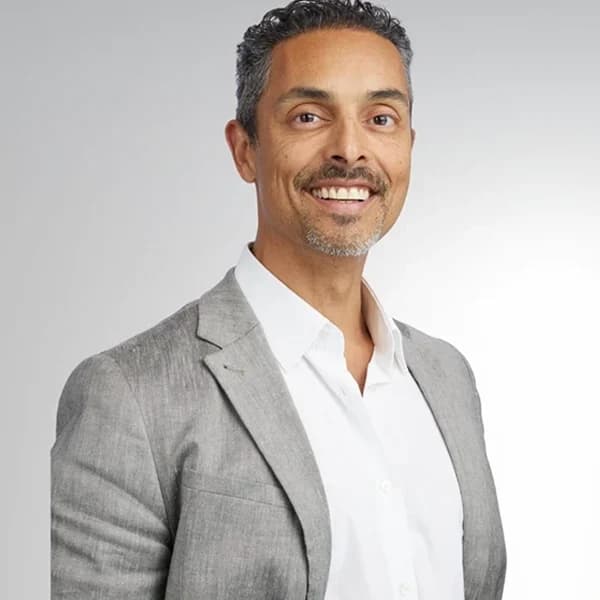
Dr. Julian De Silva is a renowned facial cosmetic surgeon at Harley Street, London, specializing in facelift, blepharoplasty, and rhinoplasty. Known for natural-looking results, he has treated top celebrities and uses advanced technology for fast recovery. Dr. De Silva is also a recognized author and educator in aesthetic surgery.