




Blepharoplasty London — World-Class Eyelid Surgery by Dr Julian De Silva
Blepharoplasty London by Dr Julian De Silva on Harley Street draws on 15+ years of experience, using advanced, tissue-preserving techniques to restore a brighter, youthful appearance while maintaining natural eyelid structure and avoiding overcorrection or unnatural results.
Board-certified
UK/EU/USA
Professor at the American Society of Oculo-Facial Plastic Surgery, USA
Author:
The Comprehensive Guide to Eyelid Surgery and Blepharoplasty
What Is Blepharoplasty?
Blepharoplasty, also known as eyelid surgery or an eyelid lift, is one of the most commonly performed facial cosmetic procedures. It rejuvenates the eye area by reshaping excess skin, muscle and prolapsing fat that accumulate with age or due to genetics. When carried out by an experienced facial plastic surgeon, it provides natural, long-lasting results with a typically swift recovery and minimal risk. As a leading specialist in blepharoplasty in London, Dr De Silva offers both upper and lower eyelid surgery.
Featured In








Blepharoplasty at a Glance

Surgery Time
1-3 Hours

Hospital Stay
Outpatient

Anaesthetic
Twilight Sedation

Time Off Work
1 Week

Driving
1 Week

Exercise
6 Weeks
View Our Blepharoplasty Patient Results
View our real patient transformations after eyelid surgery in London.
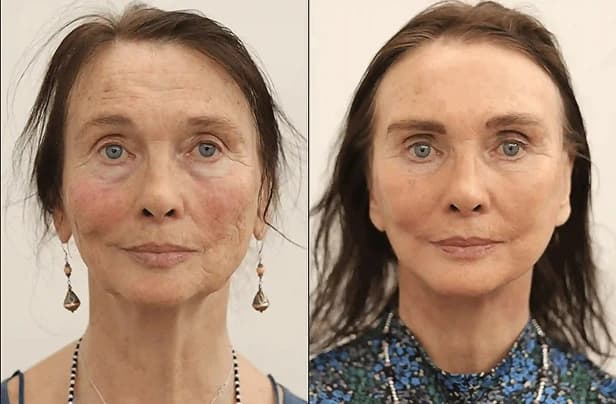
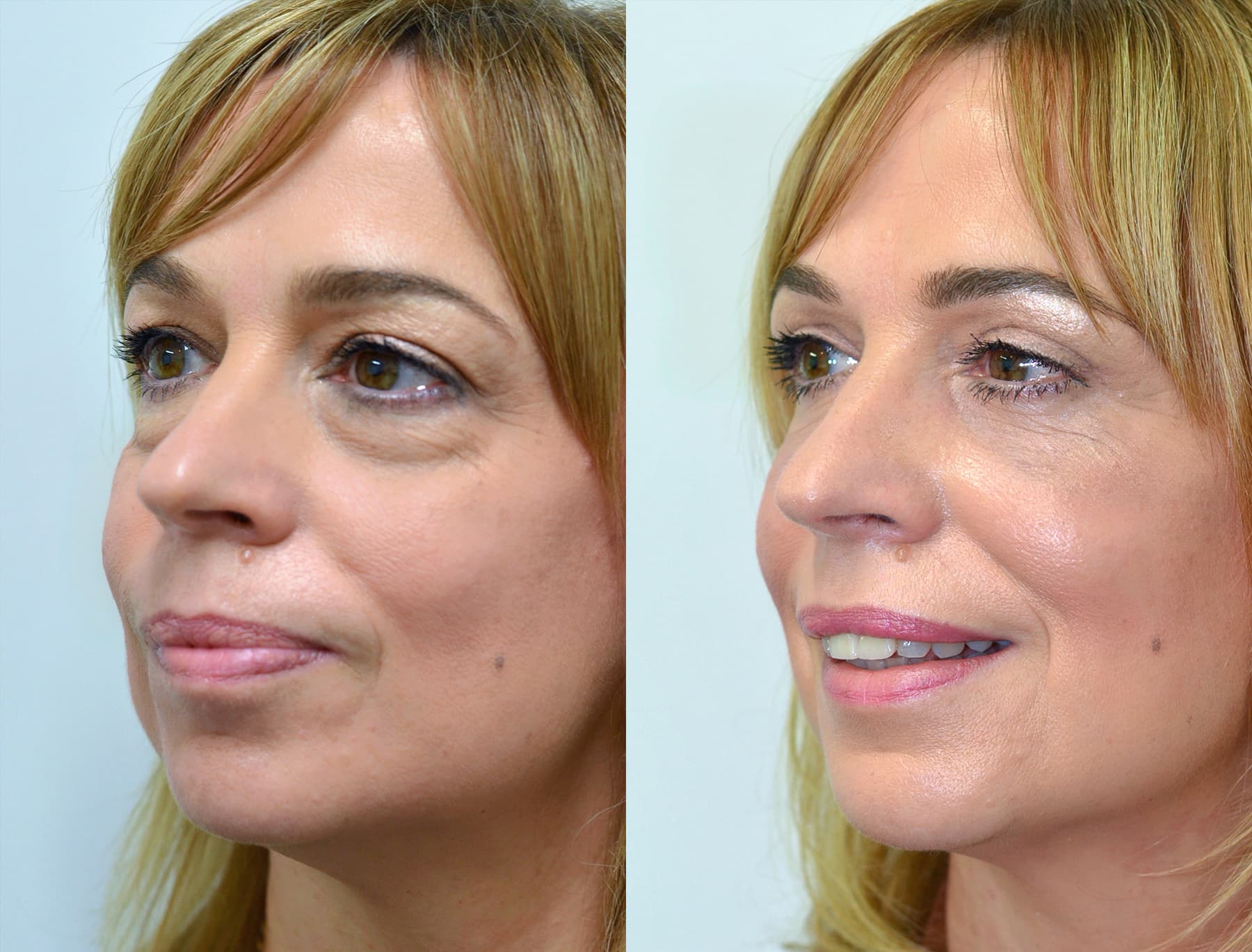
In her early 50s, this patient achieved a result that took 10–20 years off her appearance. Dr De Silva combined advanced techniques like fat transfer, state-of-the-art laser resurfacing, and regenerative medicine for a truly transformative outcome.
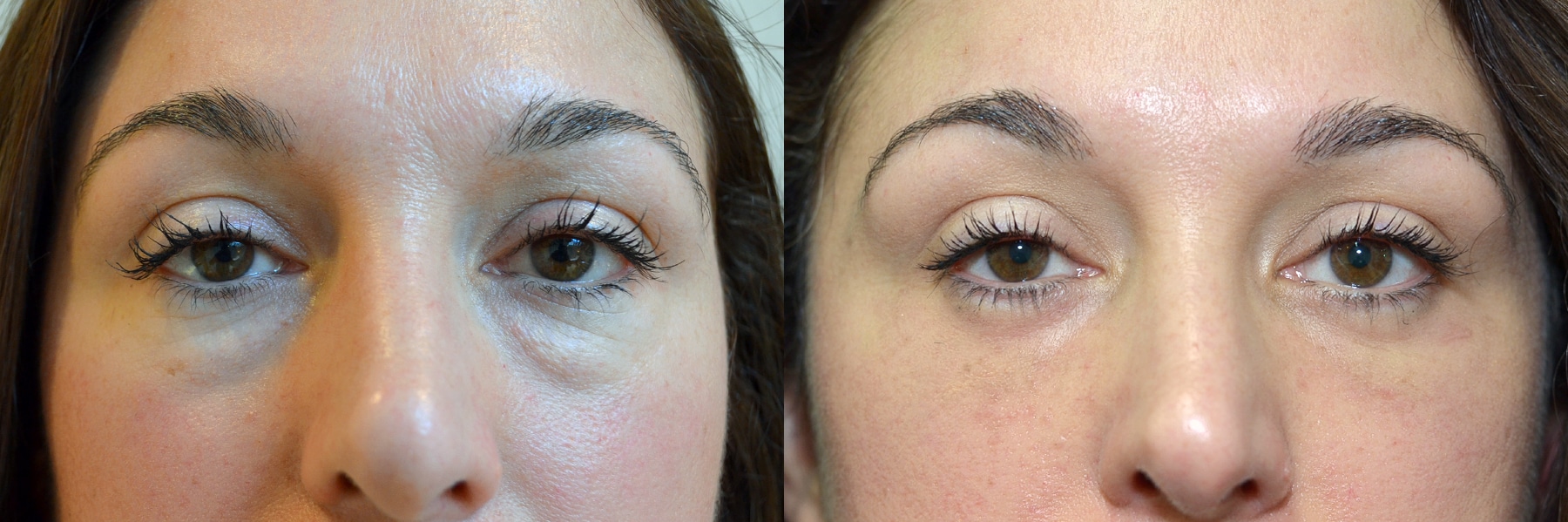
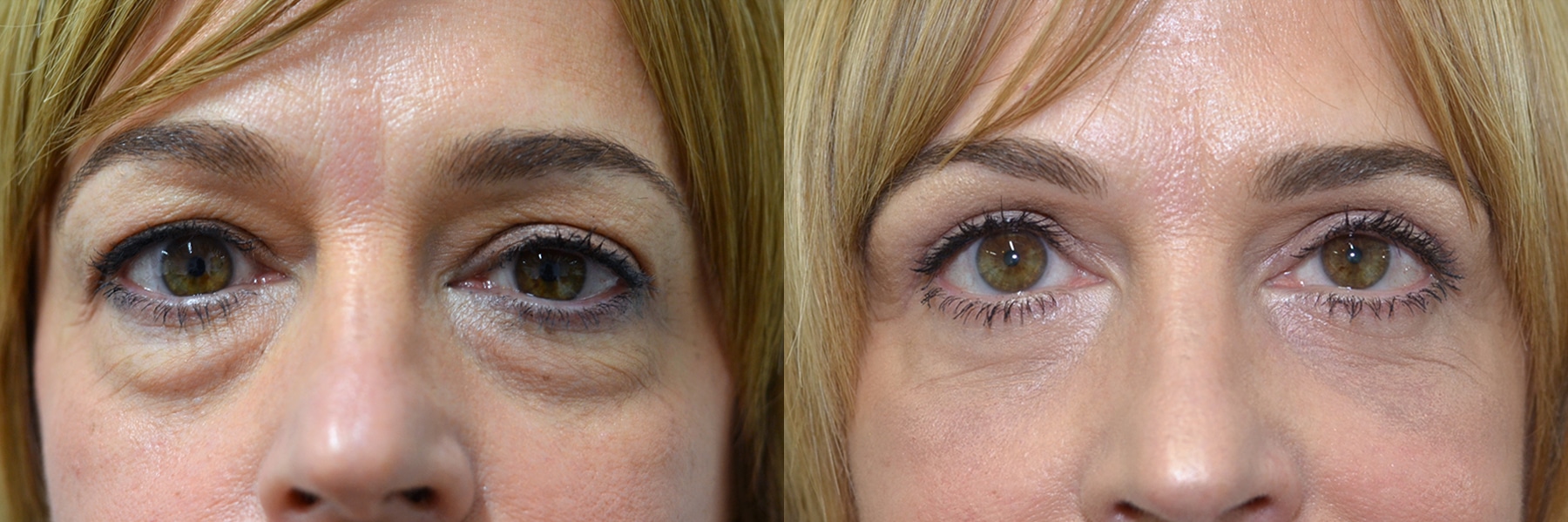
In her 40s, this patient was tired of looking tired. Dr De Silva performed a scarless lower blepharoplasty with fat transfer and laser resurfacing. The result: a refreshed, youthful, and natural appearance — with no visible signs of surgery.
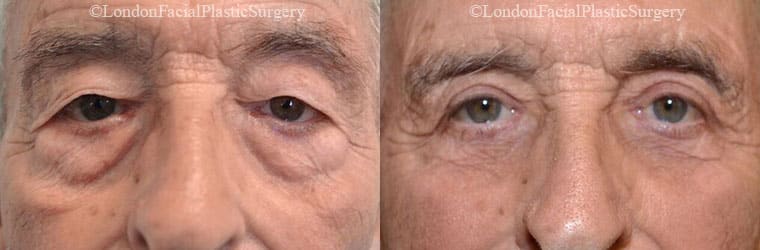
In his 80s, this patient felt his tired appearance was affecting his work. After a full medical assessment, Dr De Silva performed upper and lower blepharoplasty with fat transfer and CO2 laser. Just 6 weeks later, he is enjoying a noticeably refreshed and more youthful look.
In her early 50s, this patient achieved a result that took 10–20 years off her appearance. Dr De Silva combined advanced techniques like fat transfer, state-of-the-art laser resurfacing, and regenerative medicine for a truly transformative outcome.
In her 40s, this patient was tired of looking tired. Dr De Silva performed a scarless lower blepharoplasty with fat transfer and laser resurfacing. The result: a refreshed, youthful, and natural appearance — with no visible signs of surgery.
In his 80s, this patient felt his tired appearance was affecting his work. After a full medical assessment, Dr De Silva performed upper and lower blepharoplasty with fat transfer and CO2 laser. Just 6 weeks later, he is enjoying a noticeably refreshed and more youthful look.
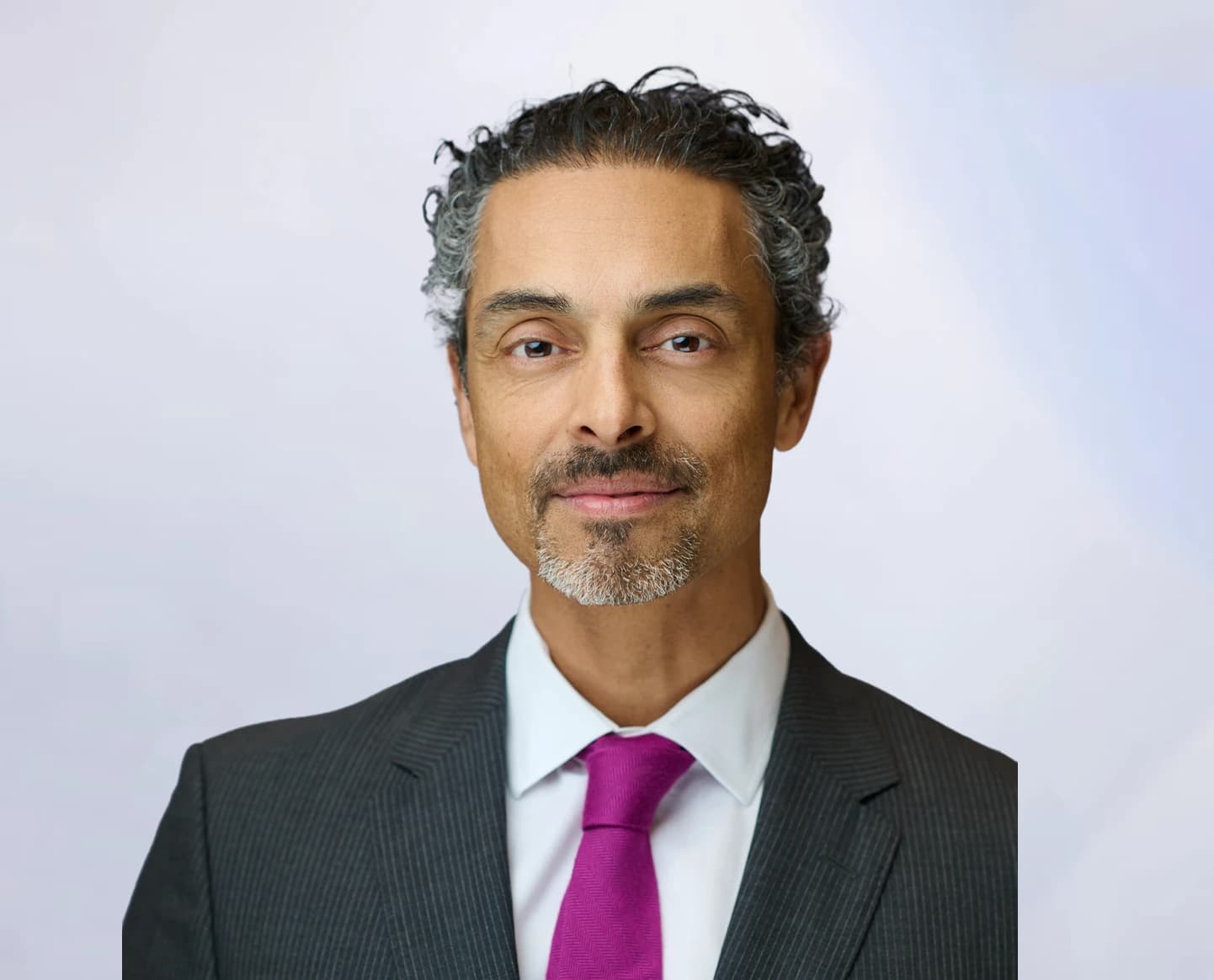
Why Choose Dr De Silva for Blepharoplasty in London?
Choosing the right surgeon for Harley Street blepharoplasty is critical. Eyelid surgery requires millimetric precision and a deep understanding of both aesthetics and function.
Dr Julian De Silva is a triple board-certified facial plastic surgeon specialising exclusively in the face. His background in microscopic and ophthalmic surgery allows detailed evaluation of eyelid function, tear production, and visual health.
- Over 30 peer-reviewed publications and textbook authorship
- Advanced fellowship training in Los Angeles and New York
- Pioneer of stitch-free tissue adhesive (ARTISS), validated in clinical trials
- Thousands of procedures performed, including complex revision cases
The main pillars of his blepharoplasty approach:
- Preserving natural identity
- Minimising trauma through tissue-sparing techniques
- Enhancing recovery with regenerative medicine
Dr De Silva’s philosophy is centred on enhancement, not transformation. By focusing exclusively on facial surgery, he is able to achieve a level of refinement that ensures patients look rested, youthful and natural, never overdone.
Consultations and surgery are carried out at Dr De Silva's CQC-regulated clinic at 23 Harley Street, London W1G 9QN — within the world-renowned Harley Street medical district.
“I am dedicated to advancing the pioneering techniques I have developed over the years to offer my blepharoplasty patients surgery results that minimise tissue trauma, allowing most patients to return to normal activity within a week, with a significantly reduced risk of complications.”
— Dr Julian De Silva
Specialist Expertise in Eyelids and Facial Surgery
Dr De Silva’s practice is dedicated solely to facial cosmetic surgery, with a background in ophthalmic surgery that enables detailed assessment of eyelid function, dry eye risk and visual health. Few cosmetic surgeons have this dual training.
Advanced Techniques Trained in Los Angeles and New York
He is the only UK cosmetic surgeon to have completed advanced fellowship training in both Los Angeles and New York, the centres where modern scarless and micro-incision eyelid techniques were developed. These methods allow structural correction with minimal trauma and no external scarring.
Pioneer of Stitch-Free Tissue Glue in Eyelid Surgery
Dr De Silva conducted the only gold-standard randomised controlled trial demonstrating the effectiveness of fibrin tissue glue as a replacement for stitches in eyelid surgery. This innovation reduces swelling, speeds recovery and improves precision in tissue handling.
CQC-Accredited, Specialist-Led Harley Street Clinic
Dr De Silva operates from a fully CQC-accredited, consultant-led surgical facility on Harley Street, one of the most regulated and respected medical districts in the world. Patients benefit from stringent safety protocols, a dedicated surgical team and purpose-built operating theatres designed specifically for facial procedures.
Trusted For His Millimetric Approach
Dr De Silva trained in microscopic surgery before cosmetic surgery. In micro-surgery, millimetres make the difference between success and failure. Using the same principles of microsurgical finesse and meticulous detail, Dr De Silva can achieve natural-looking blepharoplasty results.
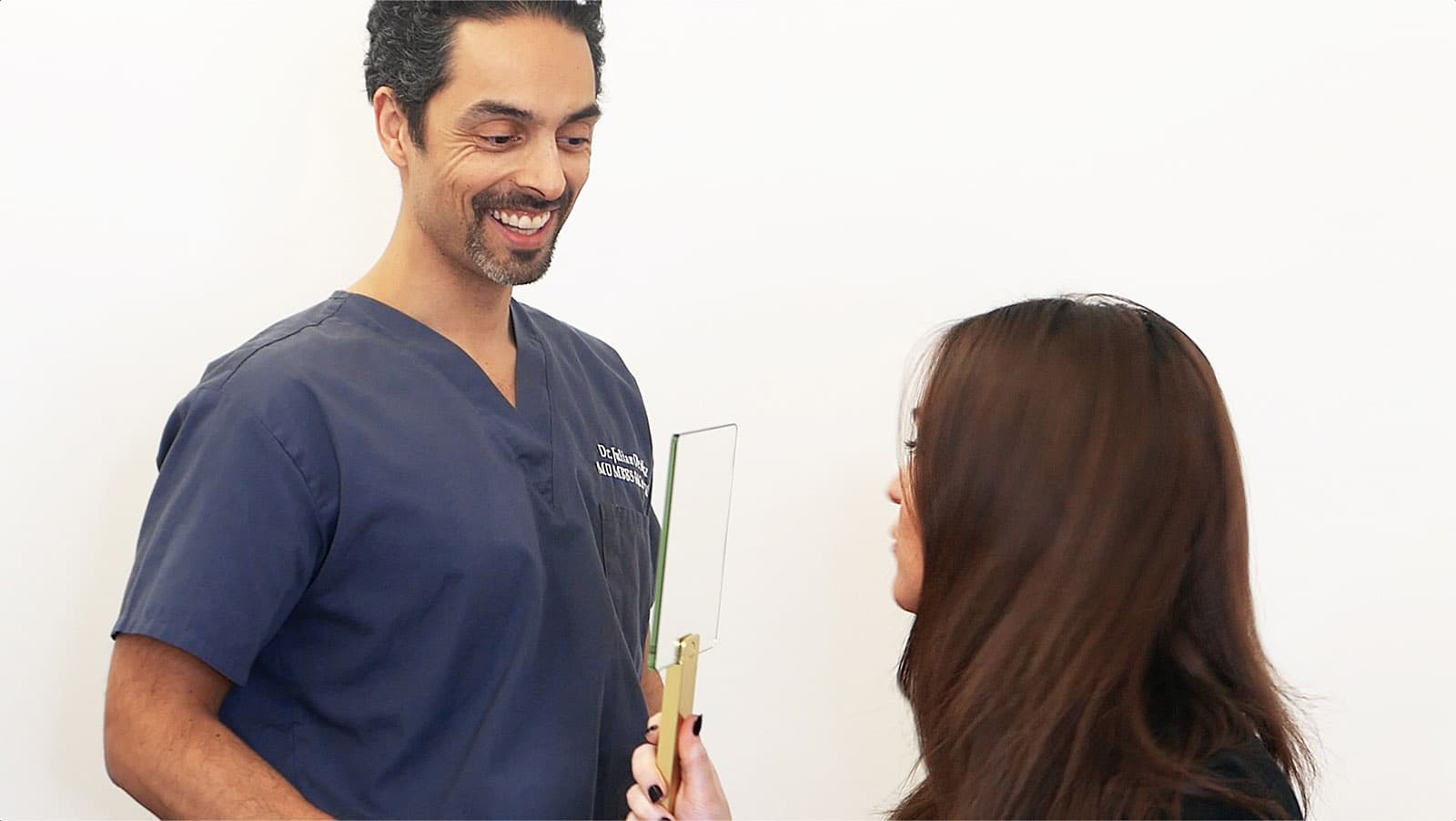
Twilight Sedation: Increased Safety and Reduced Downtime
To avoid the risks of general anaesthesia and the feeling of grogginess and nausea associated with the downtime, Dr De Silva uses twilight sedation. This ensures that the patient can breathe naturally during their eyelid surgery and their recovery time is smoother.
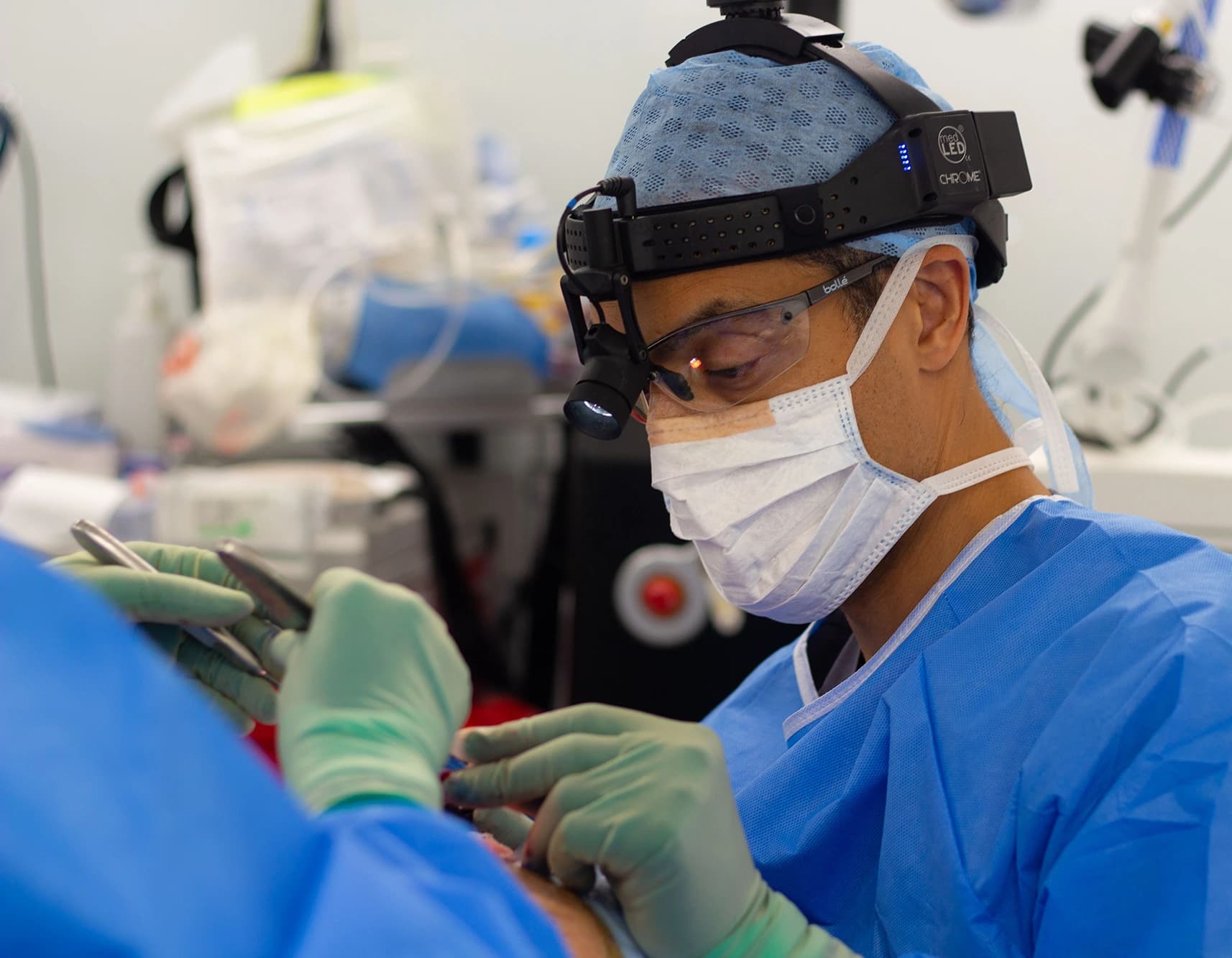
Dr De Silva's Signature Blepharoplasty Technique
Most surgeons remove tissue. Dr De Silva restores it. His signature approach centres on fat repositioning and volume preservation rather than excision, maintaining the natural softness around the eyes and avoiding the hollowed or over-operated appearance that can follow more aggressive surgery.
Every step — from the incision placement to the closure method — reflects techniques he has developed, refined and validated in clinical research over more than 15 years. This is what happens in theatre when you choose Dr De Silva:
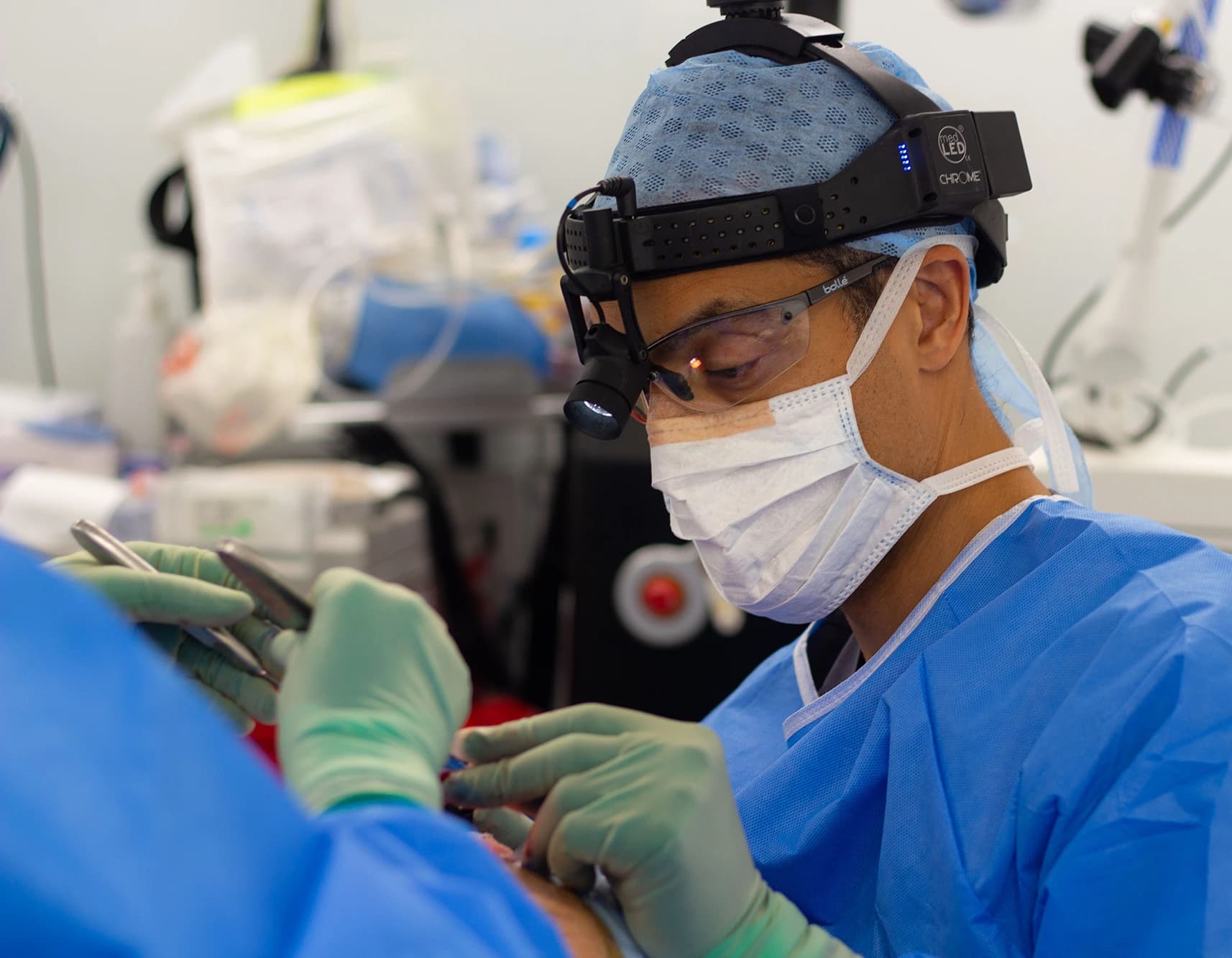
Depending on whether the upper, lower or both eyelids require correction, Dr De Silva uses a customised plan based on eyelid anatomy, brow position and facial balance.
Upper eyelid incisions are placed within the natural crease for a concealed result. Lower eyelid surgery may be performed through a hidden internal incision, avoiding visible marks and enabling highly accurate fat repositioning. This transconjunctival approach allows precise fat repositioning while minimising disruption to surrounding tissue, resulting in reduced swelling, quicker recovery, and natural-looking results. Where canthopexy is required, a subtle support stitch is placed at the outer corner of the eye to stabilise the eyelid, maintain natural shape, and prevent complications such as retraction.
Dr De Silva uses advanced micro-cannula fat transfer to restore natural eyelid–cheek volume with smooth, controlled placement and long-lasting results. Rather than removing fat, he repositions it to preserve youthful contours and prevent a hollow appearance. When brow support or upper-face lifting is needed, a 3D telescopic camera provides precise visualisation through minimal access points. Using microsurgical techniques and 3D visualisation, Dr De Silva achieves exceptional precision, reducing tissue trauma and improving symmetry.
To reduce downtime, Dr De Silva uses tissue-adhesive glue (ARTISS), supported by clinical research, instead of traditional stitches. This reduces bruising, swelling, and discomfort. Recovery can be further improved with CO₂ laser resurfacing to refine periocular skin and regenerative treatments such as PRP, which help reduce bruising and enhance healing. Dr De Silva has pioneered a fast-recovery approach integrating: micro-cannula fat transfer for smooth volume restoration; CO₂ laser resurfacing; platelet-rich plasma (PRP); and LED light therapy and oxygen therapy to reduce inflammation.
Dr De Silva uses his patented twilight sedation technique, developed over more than a decade with specialist anaesthetists. This technique ensures patients breathe naturally throughout surgery and wake quickly, without the grogginess associated with general anaesthetic.
What to Expect From Eyelid Surgery
The procedure may be completed only on the upper eyelids, the lower eyelids, or both concurrently. Commonly, blepharoplasty may be combined with tightening of the lower eyelid tendon (canthopexy or canthoplasty) or rejuvenation of the lower eyelid skin (laser treatment or skin peels) or volume restoration (e.g. fat transfer) to give the best natural results.
Initial Consultation
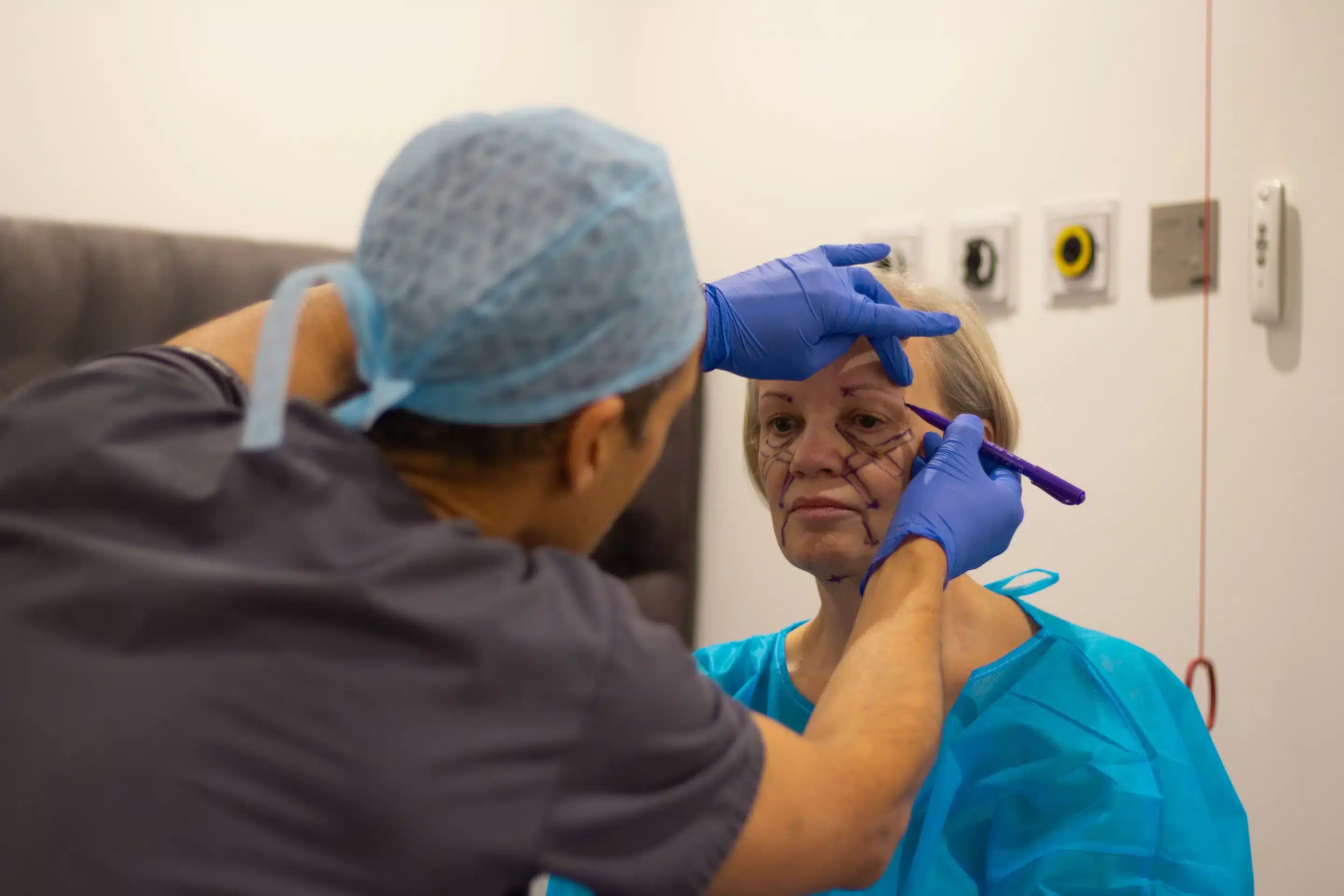
During the initial consultation, patients benefit from a detailed evaluation of eyelid function, dry eye risk and facial harmony. Dr De Silva will discuss your aesthetic and functional concerns and goals, analyse your medical history and help set realistic expectations for your surgical outcome. A second consultation will be scheduled closer to your surgery date to confirm and adjust your plan.
A detailed assessment includes:
- Eyelid function and anatomy
- Dry eye risk evaluation
- Facial harmony analysis
- Personalised surgical planning
Day of Surgery
All surgery takes place in our Harley Street CQC regulated practice. You will be advised to arrive a couple of hours before your scheduled surgery to settle in and go through any pre-op procedures. Dr De Silva will go through the selected medical plan and prepare you for surgery. Depending on the complexity of your procedure, surgery takes between 1–3 hours. In most cases, thanks to the twilight sedation method, patients come around within 30 minutes after surgery and can leave an hour after coming to.
- Performed at a CQC-accredited Harley Street clinic
- Duration: 1–3 hours
- Twilight sedation used
- Discharge within hours
Follow-up Appointment
Dr De Silva’s team provides dedicated follow-up care, with daily check-ins during the first two weeks. This attentive approach ensures comfort and enables early detection of any concerns for prompt treatment. You may also be asked to assist in in-person follow-up appointments to assess the real results of the healing process.
- Daily check-ins during early recovery
- In-person follow-ups as needed
- Ongoing support throughout healing
Dr De Silva's Eyelid Surgery Methods
Not everyone needs the same procedure. The right operation depends on which part of the eyelid is causing concern — the upper lid, the lower lid, or both — as well as your anatomy, ethnic background, and whether you have had previous surgery. Dr De Silva assesses each patient individually and selects the approach that addresses your specific concerns without altering what does not need to change.
These are the procedures he performs:
Upper Blepharoplasty
Upper blepharoplasty, or upper eyelid surgery, addresses excess skin and fat on the upper eyelids, lifting and smoothing the area. This procedure rejuvenates the eyes, reducing sagging and improving the overall appearance of the eyelid.
- Removes excess skin causing hooding
- Refines eyelid crease definition
- Supports levator muscle function
- Improves both appearance and vision
Lower Blepharoplasty
Lower blepharoplasty, or lower eye surgery, targets under-eye bags and puffiness by removing or repositioning fat. It also tightens loose skin, reducing wrinkles and dark circles, leading to a fresher, more youthful look around the eyes.
- Treats fat prolapse (eye bags)
- Smooths the eyelid–cheek junction
- Restores volume with fat repositioning
Dr De Silva specialises in transconjunctival lower blepharoplasty, a scarless internal technique.
Understanding this distinction is critical to achieving balanced, natural results rather than an over-operated appearance.
Lateral Canthoplasty
Lateral canthoplasty reshapes the outer corners of the eyes to create a more lifted and almond-shaped appearance. Often performed alongside other eyelid surgeries, it enhances the overall contour of the eyes.
Asian Double Eyelid Surgery (Ethnic Blepharoplasty)
Asian double eyelid surgery is tailored to create a natural upper eyelid crease while preserving individual ethnic identity. Dr De Silva’s approach focuses on precise crease formation, enhancing eye definition without overcorrection, and maintaining harmony with each patient’s unique facial features.
Male Blepharoplasty
Male blepharoplasty addresses signs of ageing around the eyes, such as drooping eyelids or under-eye bags, while maintaining a masculine look. The procedure preserves a strong, defined eye contour while rejuvenating the area.
Revision Blepharoplasty
Revision blepharoplasty corrects or improves previous eyelid surgeries. It may address issues such as asymmetry, excess skin, or unsatisfactory results from earlier procedures, helping to achieve a more natural and refined appearance.
- Restore eyelid shape and symmetry
- Correct hollowing or over-resection
- Improve both function and aesthetics
A significant proportion of Dr De Silva’s patients have undergone previous eyelid procedures elsewhere. Using advanced techniques in tissue repositioning, structural support and scar refinement, it is often possible to restore symmetry, improve contour and achieve a more natural appearance, even in complex cases.
Scar Placement and Healing
- Upper eyelid scars are hidden within the natural crease
- Lower eyelid surgery is often scarless (internal approach)
- Scars fade to near invisibility over time
With precise closure techniques, scars typically fade to become barely perceptible over time.
Blepharoplasty vs Fillers: Why Surgery Is Often Better
Fillers may temporarily improve the under-eye area, but they do not correct structural issues. Over time, they can cause:
- Puffiness due to fluid retention
- Migration of filler
- Distortion of natural contours
While dermal fillers may temporarily improve the under-eye area, they do not correct underlying anatomy. Over time, filler use may lead to fluid retention, product migration and distortion of natural contours.
Blepharoplasty in London addresses the root cause by repositioning fat and tightening structures, delivering a long-lasting, anatomically correct result. In many cases, previously placed filler must be dissolved before surgery to achieve optimal outcomes.
Who Is a Good Eyelid Surgery Candidate?
Ideal candidates for blepharoplasty include:
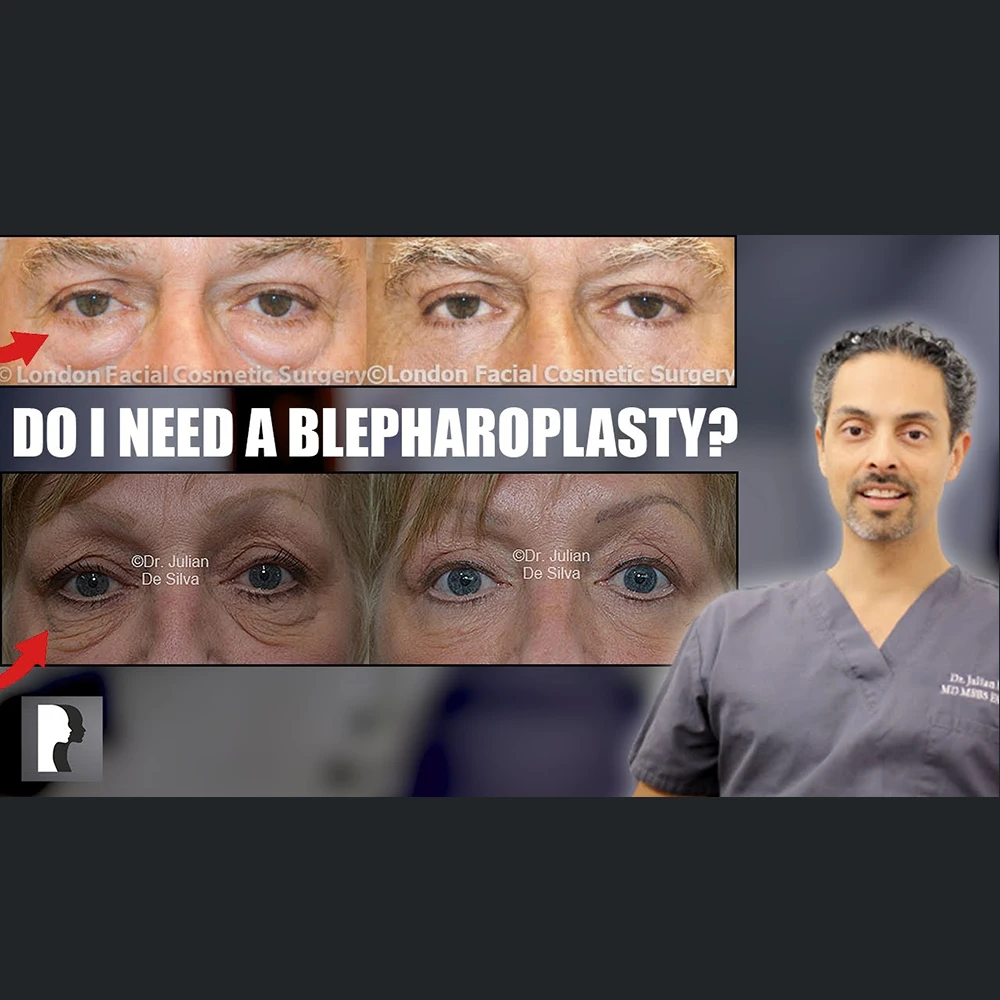
- Those with excess upper eyelid skin affecting their field of vision.
- Individuals with puffiness or under-eye bags that create a tired or aged appearance.
- People concerned about fine lines or wrinkles around the eyes that add years to their look.
- Those with a family tendency toward extra skin or fat around the eyelids.
- Patients in good overall health, with a positive mindset and clear goals for the outcome.
- Individuals with realistic expectations who understand both the potential benefits and limitations of the procedure.
What Is Blepharoplasty Recovery Like?
Recovery after eyelid surgery is generally uncomplicated, and most patients experience only mild discomfort that settles within 24–48 hours. Dr De Silva’s approach focuses on reducing tissue strain around the eyes, which helps limit bruising and swelling from the outset. Many patients require little or no pain medication, and simple measures in the first few days, such as icing the eyelids, resting, and sleeping with the head elevated, make a noticeable difference in early healing.
To further support recovery, Dr De Silva provides a structured aftercare programme that may include regenerative treatments such as platelet-rich plasma (PRP), oxygen therapy and LED light therapy. These methods help reduce inflammation, improve skin healing and shorten visible downtime.
A Typical Timeline
Every patient heals at a slightly different pace, but with Dr De Silva’s techniques and comprehensive guidance, recovery is faster, more comfortable and produces natural, long-lasting results.
Ice packs recommended; mild swelling and bruising; avoid strenuous activity.
Stitches (if used) removed; most bruising reduced; light makeup may be applied to conceal residual marks.
Many patients return to work and social activities; continued reduction in swelling.
Fit to drive, exercise lightly and resume normal routines.
Residual swelling continues to settle; eyelid contours become more refined.
Final results emerge as the eyelids fully settle and the skin smooths.
Blepharoplasty delivers long lasting results that typically remain stable for many years. While natural ageing continues, the structural improvements made during surgery endure and most patients find they continue to look refreshed and rested well into the future.
Possible Blepharoplasty Surgery Risks
One of the most important factors in eyelid surgery is the experience of the surgeon. In Dr De Silva’s hands, complications are uncommon, with swelling and bruising being the most common aspects of recovery.
- Complications are uncommon
- Infection risk is minimised with preventative protocols
- Twilight sedation avoids risks associated with general anaesthesia
- Serious complications such as vision issues are extremely rare, with extensive safeguards in place
Specifically:
- Pain or discomfort is uncommon and resolves within 24 hours. Infection is very rare, and the gold standard is prophylactic antibiotics to protect against infection.
- Dr De Silva avoids the side effects of general anaesthesia (deep vein thrombosis and allergies) by using safer sedation anaesthesia.
- Two rare and serious complications are eyelid retraction and damage to vision. In Dr De Silva's extensive experience performing blepharoplasty, these complications have not occurred in his practice to date. Multiple layers of precaution are built into every procedure from pre operative assessment through to surgical technique and aftercare and minimise these risks from the outset.
Blepharoplasty Price in London
The cost of Blepharoplasty in London at Dr De Silva’s Harley Street clinic varies depending on the complexity of the procedure, whether upper eyelid surgery, lower blepharoplasty, or a combined approach is required.
At Dr De Silva’s practice, fees are personalised to each patient and are fully inclusive, covering the surgeon’s expertise, anaesthesia, surgical facility, and aftercare.
Factors that influence the blepharoplasty price include:
- Upper vs lower eyelid surgery
- Use of advanced techniques (e.g. fat repositioning, laser, PRP)
- Complexity or revision surgery
- Combination with other procedures
A personalised quote is provided following a detailed consultation to ensure the most appropriate and effective treatment plan.
Can Blepharoplasty Be Combined With Other Techniques?
Blepharoplasty is often performed alongside complementary facial procedures to achieve balanced, natural-looking results. When appropriate, Dr De Silva combines eyelid surgery with treatments that address ageing changes across the upper, mid and lower face.

Upper Third of the Face:
- Brow or forehead lift
- Upper facial anti-wrinkle treatments
- Skin resurfacing for fine lines

Middle Third of the Face:
- Fat transfer or volume augmentation to the cheeks
- Mid-face lifting where structural support is required
- Laser or resurfacing treatments for lines and texture changes

Lower Third of the Face:
Considering Blepharoplasty in London? Contact Us
If you are exploring eyelid surgery to address puffiness, hooded lids or a tired appearance, consulting a surgeon with dedicated expertise is essential. As one of the leading specialists in blepharoplasty in the UK, Dr De Silva offers a precise, evidence-based approach focused on natural, long-lasting results.
A detailed consultation with Dr De Silva includes a full facial assessment, discussion of your goals, and a personalised surgical plan designed to deliver natural, long-lasting results.

Dr Julian De Silva is a renowned facial cosmetic surgeon at Harley Street, London, specialising in facelift, blepharoplasty, and rhinoplasty. Known for natural-looking results, he has treated top celebrities and uses advanced technology for fast recovery. Dr De Silva is also a recognised author and educator in aesthetic surgery.
Frequently Asked Questions
What is the difference between upper and lower blepharoplasty?
What is the difference between upper and lower blepharoplasty?
Upper blepharoplasty addresses excess skin and heaviness of the upper eyelid — the hooding that can make the eyes appear smaller or create a tired, heavy expression. Lower blepharoplasty addresses the under-eye area: puffiness, bags caused by prolapsing fat, and the junction between the lower lid and cheek.
Many patients require only one area treated, while others benefit from combined upper and lower surgery. Dr De Silva also assesses brow position and checks for ptosis, a drooping of the upper eyelid caused by a weakened muscle rather than excess skin, because these can closely mimic eyelid heaviness and require a different surgical approach. Getting this assessment right is as important as the surgery itself.
Can upper and lower blepharoplasty be done at the same time?
Can upper and lower blepharoplasty be done at the same time?
Yes, many patients choose to have both upper and lower surgery at the same time, which means one recovery period rather than returning for a second procedure. For most patients this is the most practical approach, as the combined recovery of one to two weeks is shorter overall than two separate recoveries.
Some patients prefer to stage the procedures; having one area first, and returning for the second once they have seen and felt confident in the initial result. Dr De Silva advises based on your specific anatomy, your goals, and what is safest for you individually. Both approaches are entirely valid and the decision is made together at consultation.
Will blepharoplasty look natural?
Will blepharoplasty look natural?
A well-performed blepharoplasty should be undetectable as surgery. The goal is that people notice you look more rested, refreshed and open — and not that they can identify what has been done. Dr De Silva’s approach consistently prioritises this: avoiding over-removal of skin or fat, respecting the natural brow balance, and planning conservatively.
The most reliable way to gauge whether a surgeon’s results look natural is to review genuine, unedited before and after photographs of their actual patients. At consultation, Dr De Silva will discuss a realistic plan based on your specific anatomy and what a natural outcome looks like for your face.
Why do some people look unnatural after eyelid surgery?
Why do some people look unnatural after eyelid surgery?
Unnatural results after blepharoplasty most commonly arise from excessive tissue removal or from changing the eyelid shape in ways that do not suit the individual face. In the upper eyelid, an overly high crease or removal of too much skin can create a hollowed, surprised or feminised appearance, particularly problematic in men. In the lower eyelid, excessive skin tightening or inadequate support of the lid margin can cause the lid to pull downward, exposing the white of the eye below the iris.
Dr De Silva reduces these risks through meticulous measurement, conservative tissue removal, and where appropriate, the use of lid support techniques such as canthopexy. His philosophy is that what is not removed cannot be undone; precision and restraint produce more enduring, natural results than aggressive surgery.
Where are the scars after blepharoplasty, and will they be visible?
Where are the scars after blepharoplasty, and will they be visible?
For upper blepharoplasty, the incision is placed meticulously within the natural upper eyelid crease, so that as it heals it blends seamlessly into the existing eyelid fold. In most patients, the scar becomes virtually invisible within a few months.
For lower blepharoplasty, there are two approaches. An external incision is placed just below the lower lash line — a fine line that heals well and is difficult to detect. Alternatively, Dr De Silva frequently uses the trans-conjunctival approach, where the incision is made on the inside of the eyelid, leaving no visible scar on the skin at all. This internal approach is particularly suited to patients whose primary concern is fat rather than excess skin, and to patients where scar minimisation is a priority.
Is blepharoplasty painful, and what is the recovery like?
Is blepharoplasty painful, and what is the recovery like?
Blepharoplasty is not regarded as a painful procedure. Most patients experience a mild ache or tightness that settles within 48 hours, and the majority require only over-the-counter paracetamol for comfort. Dr De Silva’s use of twilight sedation rather than general anaesthetic means patients wake faster, feel significantly less nauseous, and are typically able to leave the clinic within an hour of surgery completing.
Most swelling and bruising resolves within one to two weeks, though lower eyelid surgery tends to bruise more than upper. Applying cool compresses to the eyelids regularly in the first three days, keeping the head elevated when sleeping, and avoiding strenuous activity in the first two weeks all support a smoother, faster recovery. Final settled results are visible at three to six months, as residual swelling fully resolves.
Is there an age limit for blepharoplasty?
Is there an age limit for blepharoplasty?
There is no specific age limit for blepharoplasty. The procedure is appropriate whenever the changes to the eyelids are causing genuine concern; whether that is in someone’s 30s due to genetics, or in their 70s or 80s due to the natural ageing process. Dr De Silva has treated patients across this full range, including older patients for whom excess eyelid skin was beginning to affect their field of vision.
What matters more than age is general health and fitness for surgery. With increasing age, additional factors sometimes require consideration — dry eyes, eyelid laxity, and drooping of the eyelid muscle (ptosis), which may need to be assessed and addressed as part of the surgical plan. A thorough pre-operative assessment ensures that surgery is safe and that the result is the best achievable for each individual patient. For an accurate assessment of suitability and cost, a consultation with Dr De Silva is the right first step.
Will I Have Visible Scars After Upper Blepharoplasty?
Will I Have Visible Scars After Upper Blepharoplasty?
Dr De Silva places incisions along the natural crease of the eyelid, making them discreet and minimally visible once healed. With his precise technique, scars are typically well-hidden, and they continue to fade over time, leaving only subtle traces.
How Soon Will I See Results After Upper Blepharoplasty?
How Soon Will I See Results After Upper Blepharoplasty?
Most patients begin to see noticeable improvements as soon as 1 week after surgery, however there will be some swelling. Most healing occurs within 6 weeks and the final results typically appear within 9-12 months, when the eyelid area has fully healed and the skin settles into its natural position.
Will Upper Eyelid Surgery Change My Appearance?
Will Upper Eyelid Surgery Change My Appearance?
When performed by an expert like Dr De Silva, upper blepharoplasty won’t change your appearance, Dr De Silva asks patients to bring old photographs and will use this as a template for your procedure. The procedure enhances the natural contours of the eyelids, creating a more refreshed, youthful look while maintaining a masculine appearance. Dr De Silva adapts each surgery to your facial anatomy to ensure results feel natural and enhance your profile.
Can lower blepharoplasty treat dark circles and under-eye bags?
Can lower blepharoplasty treat dark circles and under-eye bags?
Lower blepharoplasty can dramatically reduce the appearance of under-eye bags and structurally caused dark circles, though the two concerns have different origins and are addressed differently. Under-eye bags are caused by fat that has shifted forward over time, creating a visible bulge beneath the eye. Dark circles caused by a shadow effect, where the fat pad above creates a convexity that deepens the hollow beneath, can be significantly improved by repositioning that fat into the tear trough, smoothing the transition between the lower lid and the cheek. Dark circles caused by skin pigmentation are a separate issue and are not resolved by surgery alone, though CO₂ laser resurfacing or skin treatments can be incorporated where pigmentation is also a factor. At consultation, Dr De Silva assesses the precise cause of each patient's concerns before recommending a course of treatment.
Is fat removed or repositioned during lower blepharoplasty?
Is fat removed or repositioned during lower blepharoplasty?
In most cases, Dr De Silva repositions rather than removes fat during lower blepharoplasty. This is a meaningful distinction. Removing fat reduces the bulge, but it can leave the area looking hollow or sunken - a common cause of dissatisfaction after surgery performed elsewhere, and one of the most difficult outcomes to correct. Repositioning the fat moves it from where it has prolapsed forward into the tear trough beneath, where it restores volume and creates a smooth, continuous contour from lower lid to cheek. In select cases, a small amount of removal may be used in combination with repositioning. Where additional volume is needed, micro-cannula fat transfer can be incorporated. The approach is determined entirely by each patient's anatomy, assessed at consultation.
Will I have visible scarring after lower blepharoplasty?
Will I have visible scarring after lower blepharoplasty?
In many cases there is no external scar at all. Dr De Silva frequently uses the transconjunctival approach, where the incision is made on the inside of the lower lid, leaving no visible mark on the skin surface. This is appropriate when the primary concern is fat; either excess or displaced, and skin elasticity is good. Where skin removal is also required, a fine incision is placed immediately beneath the lash line, following the natural crease of the lower lid; when healed, this is typically imperceptible. Healing is further supported by Dr De Silva's use of fibrin tissue adhesive at the wound edges; a technique he evaluated in a formal randomised controlled trial of skin closure in eyelid surgery, which reduces tension, minimises bruising and supports a cleaner, faster recovery than sutures alone.
What is the recovery from lower blepharoplasty like, and when will I see the final result?
What is the recovery from lower blepharoplasty like, and when will I see the final result?
Most patients experience bruising and swelling in the first week, which resolves progressively over the following one to two weeks. For the first three days, a strict ice regime (ten minutes per hour) significantly reduces bruising and swelling. The head should be kept elevated at a 45-degree angle when sleeping to prevent overnight swelling from accumulating. Sun exposure must be avoided for a minimum of six weeks; the healing skin around the eye is particularly vulnerable to hyperpigmentation, so SPF sunscreen, UV-protective sunglasses and a hat are essential whenever outdoors. Some numbness or altered sensation around the upper eyelid can occur and may take up to six months to fully resolve - this is normal. Most patients feel comfortable being seen socially within two to three weeks. Normal exercise can typically resume at four weeks. Internal stitches dissolve gradually over up to three months, and the left and right sides may heal at slightly different rates during this period. Final results are fully established at six to twelve months, as all residual swelling settles.
Can lower blepharoplasty be combined with other procedures, and how do I know if I am a good candidate?
Can lower blepharoplasty be combined with other procedures, and how do I know if I am a good candidate?
Lower blepharoplasty is frequently combined with upper blepharoplasty, CO₂ laser resurfacing, facelift or micro-cannula fat transfer, and for many patients a combined approach produces a more balanced, complete result than treating the lower lid in isolation. Whether surgery is the right recommendation at all depends entirely on the structural cause of each patient's concerns. Non-surgical options, including tear trough filler and skin treatments, can be appropriate for early-stage hollowing or mild laxity, and Dr De Silva will say so honestly when that is the case. Once there is true fat prolapse, significant skin laxity or structural change that injectables cannot address, surgery is the only treatment that produces a lasting result. The consultation- drawing on Dr De Silva's oculo-facial specialist training and more than two decades of experience operating on the lower eyelid specifically, is the right place to make that determination accurately.
What makes Dr De Silva's approach to lower blepharoplasty different?
What makes Dr De Silva's approach to lower blepharoplasty different?
Dr De Silva's approach to lower blepharoplasty is distinguished by three things: specialist training, evidence-based technique, and a consistent philosophy of preservation over removal. His fellowship training in oculo-facial plastic surgery at Moorfields Eye Hospital, UCLA Jules Stein Eye Institute and Albert Einstein College of Medicine means the lower eyelid is anatomy he has studied and operated within at the highest level. He is a member of the American Society of Oculo-Facial Plastic and Reconstructive Surgery and the British OculoPlastic Surgery Society; the specialist bodies for this precise area of surgery. His use of fibrin tissue adhesive in eyelid surgery is supported by his own randomised controlled trial, one of very few such studies in this field, which demonstrated meaningfully reduced bruising and improved healing compared with conventional sutures. Over 20% of his patients come to him to correct or improve results from surgery performed elsewhere- a reflection of the trust that comes from consistent, precise outcomes.
What are the risks specific to lower blepharoplasty?
What are the risks specific to lower blepharoplasty?
The most significant complication specific to lower blepharoplasty is ectropion - a pulling down of the lid margin, which can occur when too much skin is removed or when healing creates excessive tension on the lower lid. Dr De Silva directly addresses this risk through conservative skin excision, preferential use of the transconjunctival approach, and fat repositioning rather than removal. Dry eye symptoms can be temporarily heightened in the early weeks of recovery. Some asymmetry during healing is normal, as the left and right sides can resolve at different rates- this typically settles as healing progresses. Dr De Silva conducts an annual clinical audit of all outcomes; his revision rate across all procedures has remained consistently between three and six percent, reflecting the precision and conservatism of his surgical approach. All risks are discussed in full at consultation before any decision is made.