


Male Facelift and Neck Lift
Dr De Silva’s male facelift and neck lift procedures at his Harley Street clinic refine facial structure with precision and discretion, avoiding the over-tightened or feminised look that can occur with standard cosmetic surgery.
What Is a Male Facelift and Neck Lift?
Unlike traditional facelifts designed around female features, a male facelift and neck lift redefine the lower face with techniques built around masculine anatomy. Thicker skin, denser muscle, facial hair and masculine bone structure require precise handling to preserve angularity and avoid visible signs of surgery. Dr De Silva plans every incision around natural beard lines and hair patterns so facial hair rests exactly where it should once healed. The result is a sharper, stronger profile that looks refined and natural, never tight, soft, or “done.”
Many men choose this procedure to project confidence, strength, and vitality, both personally and professionally. Dr De Silva’s deep understanding of male facial anatomy allows him to enhance definition and youthfulness while protecting the natural character of the face.

Male Face and Neck Lift at a Glance

Surgery Time
1-3 Hours

Hospital Stay
Outpatient

Anaesthetic
Twilight Sedation

Time Off Work
2 Weeks

Shower & Shaving
1-2 Weeks

Return To Routine
1 Week

Exercise
After 6 Weeks

Sexual Activity
6 Weeks

Driving
2 weeks

Recovery
6-8 Weeks
Featured In








Interested in a Male Facelift and Neck Lift in London? Discover Our Patient Results
Dr De Silva avoids a “one-size-fits-all” approach, focusing instead on subtle enhancements that bring out your best features while addressing areas of concern. Discover our real-life patient transformations.
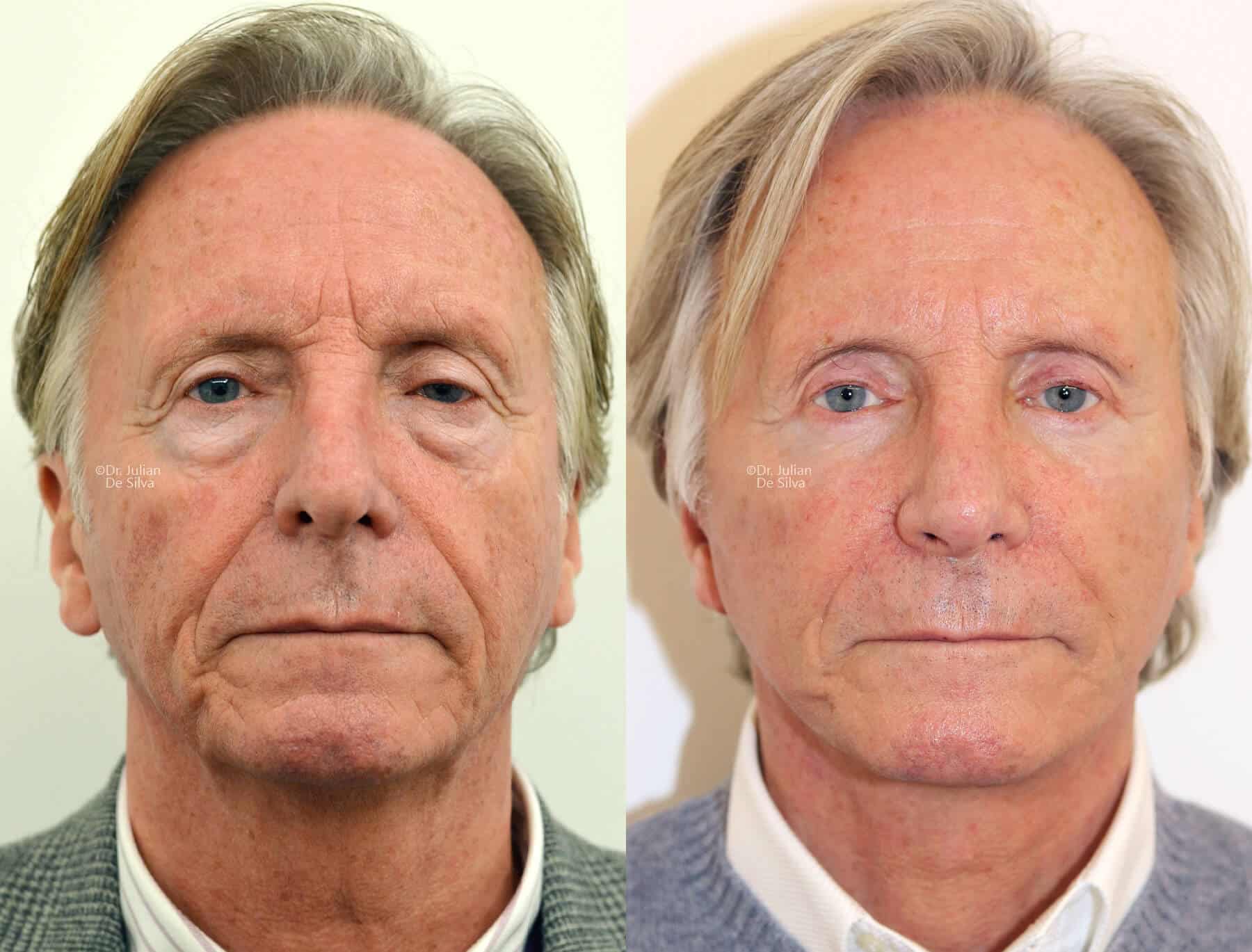
“I was tired of looking tired. Now my face reflects how I feel—it’s made such a difference.” This patient followed a phased treatment plan with Dr. De Silva over several years, including ptosis eyelid surgery, volume restoration, and a vertical deep plane facelift, achieving a refreshed and authentic result.

The tired, heavy neck bands were replaced with a fresher, more energized, and confident look. Dr. De Silva lifted and tightened the platysma bands and performed deep neck surgery to reduce excess fat and refine the lower salivary glands for a smoother, more defined result.
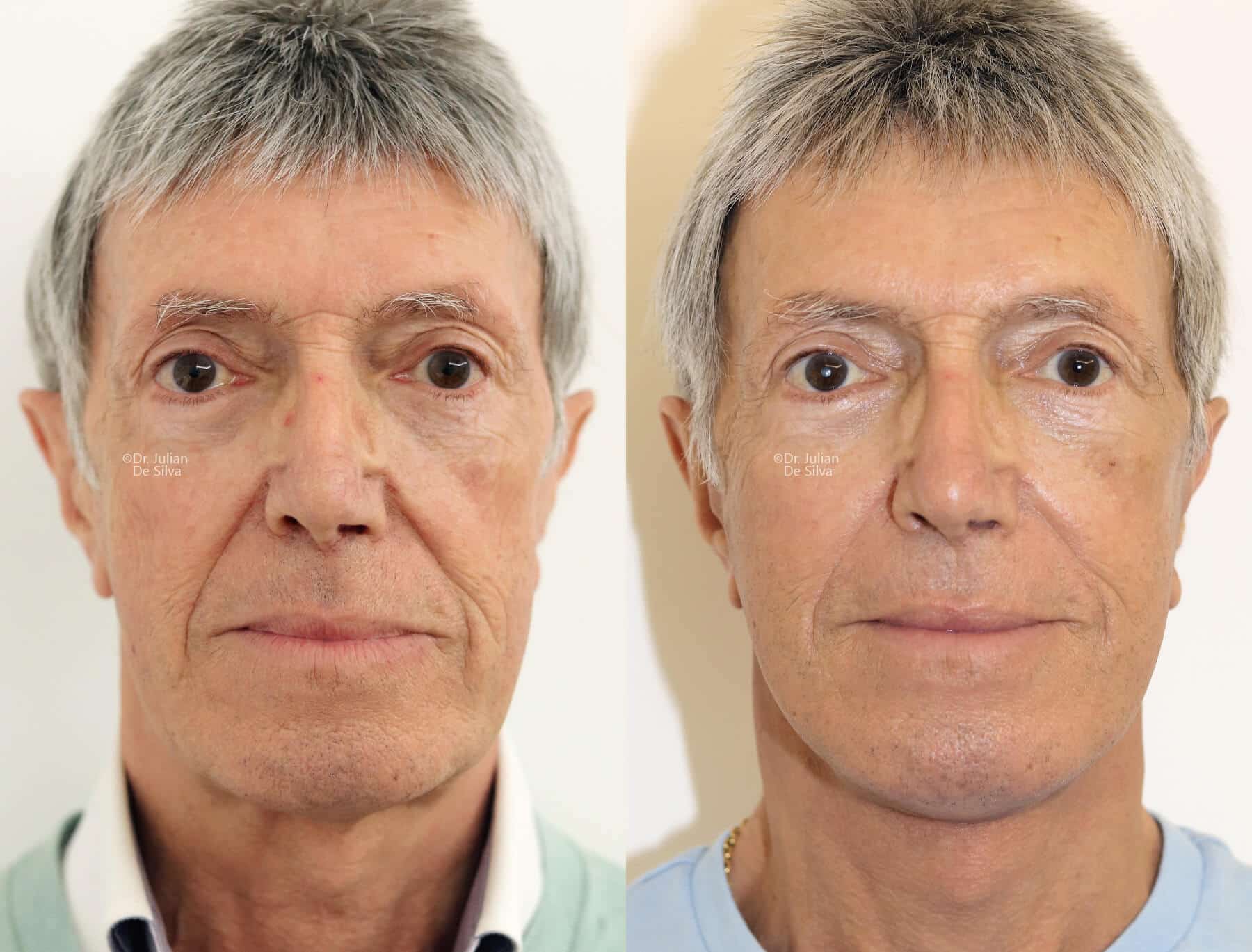
Signature natural facelift and neck lift with fat transfer by Dr. Julian De Silva. This patient felt fuller along the jawline and wanted to restore her heart-shaped contour and a tighter, more defined jaw. After non-surgical options failed, she chose a solution that truly worked. Using a shortened incision hidden around the ear, Dr. De Silva combined the power of the deep plane facelift to lift drooping cheeks, nasolabial folds, and early jowling. Regenerative medicine and hyperbaric oxygen therapy accelerated her recovery—leaving her looking absolutely amazing.
“I was tired of looking tired. Now my face reflects how I feel—it’s made such a difference.” This patient followed a phased treatment plan with Dr. De Silva over several years, including ptosis eyelid surgery, volume restoration, and a vertical deep plane facelift, achieving a refreshed and authentic result.
The tired, heavy neck bands were replaced with a fresher, more energized, and confident look. Dr. De Silva lifted and tightened the platysma bands and performed deep neck surgery to reduce excess fat and refine the lower salivary glands for a smoother, more defined result.
Signature natural facelift and neck lift with fat transfer by Dr. Julian De Silva. This patient felt fuller along the jawline and wanted to restore her heart-shaped contour and a tighter, more defined jaw. After non-surgical options failed, she chose a solution that truly worked. Using a shortened incision hidden around the ear, Dr. De Silva combined the power of the deep plane facelift to lift drooping cheeks, nasolabial folds, and early jowling. Regenerative medicine and hyperbaric oxygen therapy accelerated her recovery—leaving her looking absolutely amazing.
Key Differences In Male Surgery
Men’s facial anatomy differs significantly from women’s. The incision lines must respect beard and sideburn placement, and the deeper soft tissue (SMAS) requires advanced surgical skill to maintain definition without tightness.
Skin & Muscle
Thicker skin and firmer musculature mean tension must be redistributed more deeply to preserve a firm, natural contour.
Bone Structure
The broader, angular male jawline dictates a more lateral vector of lift, reinforcing definition rather than softening it.
Fat Composition
In men, neck fat tends to be denser and more fibrous. Dr De Silva employs precision micro-liposculpture to achieve even contouring and sharp jawline definition.
Blood Supply
Men’s thicker skin and denser tissue can lead to slightly more bleeding, so meticulous surgical precision is essential.
Facial Hair
Incisions must be strategically placed to preserve natural beard lines and sideburns, avoiding visible disruption to hair growth.
Target Areas
The jawline and neck are primary targets in male facial surgery, where heavier tissue and muscle bands can obscure definition with age.
How Dr De Silva Conceals Scars in Male Patients
Because men often wear shorter hairstyles, scar concealment is critical. Thicker skin also makes Dr De Silva’s advanced closure methods, tissue glue, fine sutures, and regenerative treatments optimal for scar healing. Dr De Silva uses a series of techniques to ensure discreet recovery:
Dr De Silva conceals scars by placing the visible part of the incision inside the ear canal or just behind the small cartilage prominence (tragus) at the front of the ear. In men with greater skin laxity, incision placement is adjusted to prevent any change in beard-line position.
Multiple-layered skin closure ensures that there are deep stitches to support the soft tissues once the superficial skin stitches are removed; this is key to avoiding unattractive widened scars.
In hair-bearing skin, the use of a bevelled incision in the hairline enables hair to grow through the scar after surgery, hiding the scar in hair-bearing skin.
Lifting the deep tissues beneath the skin (SMAS or Deep Muscle Tightening) before skin closure is essential to give a natural-looking result and avoid tension on the skin.
Why Men Choose Dr De Silva
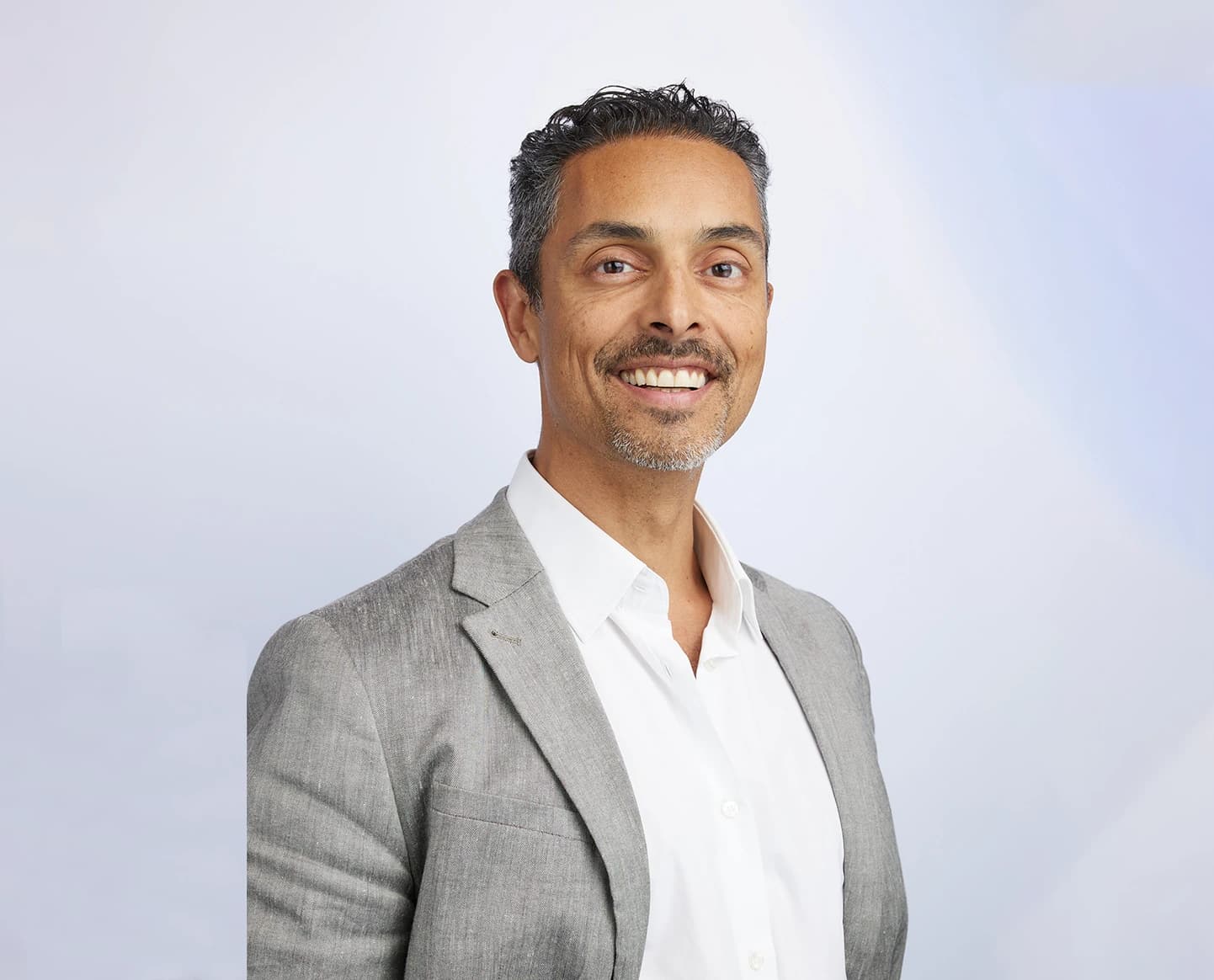
Dr Julian De Silva is a world-recognised facial plastic surgeon who focuses exclusively on the face and has performed over 1,000 facelift procedures, including many male-specific surgeries.
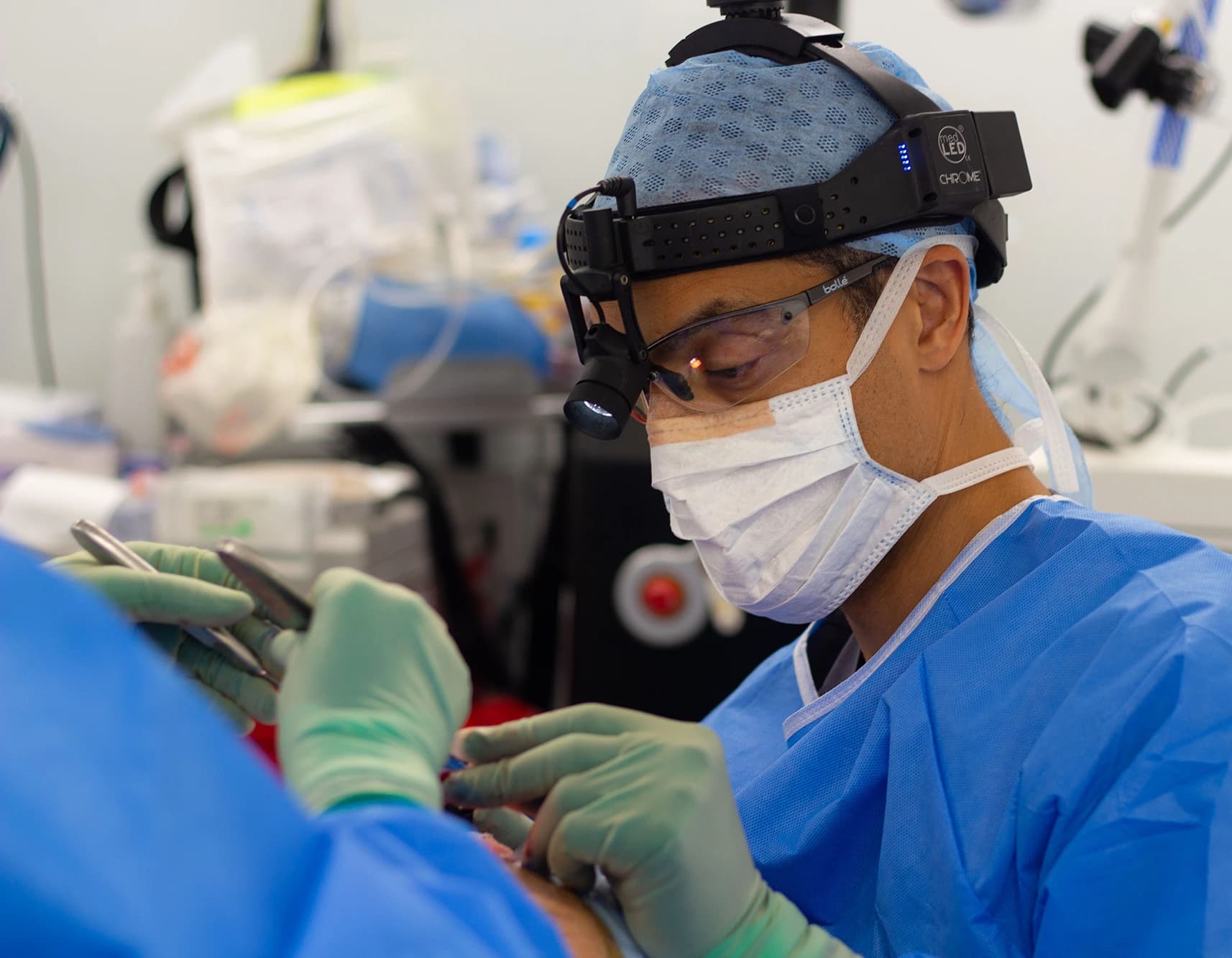
Men choose him for his signature, pioneering adaptation of his deep-plane facelift technique, engineered specifically for male facial anatomy and enhanced by 3D telescopic technology that enables microscopic incisions and millimetric accuracy. Dr De Silva maps each incision along natural beard growth and hairline vectors, positioning preauricular and postauricular lines to preserve follicular orientation and conceal scars. This approach is used even in men with short hair or temporal recession, ensuring undetectable, anatomically precise results. Only 10–20 % of his male patients experience visible bruising, reflecting his meticulous technique and uncompromising standards of care that define Dr De Silva’s Harley Street surgery.
Respected for his calm precision and evidence-based care, Dr De Silva combines anatomical expertise and knowledge of the golden ratio with an exacting approach that has made him a leading name in male facial rejuvenation.
Watch Patient Video Diaries
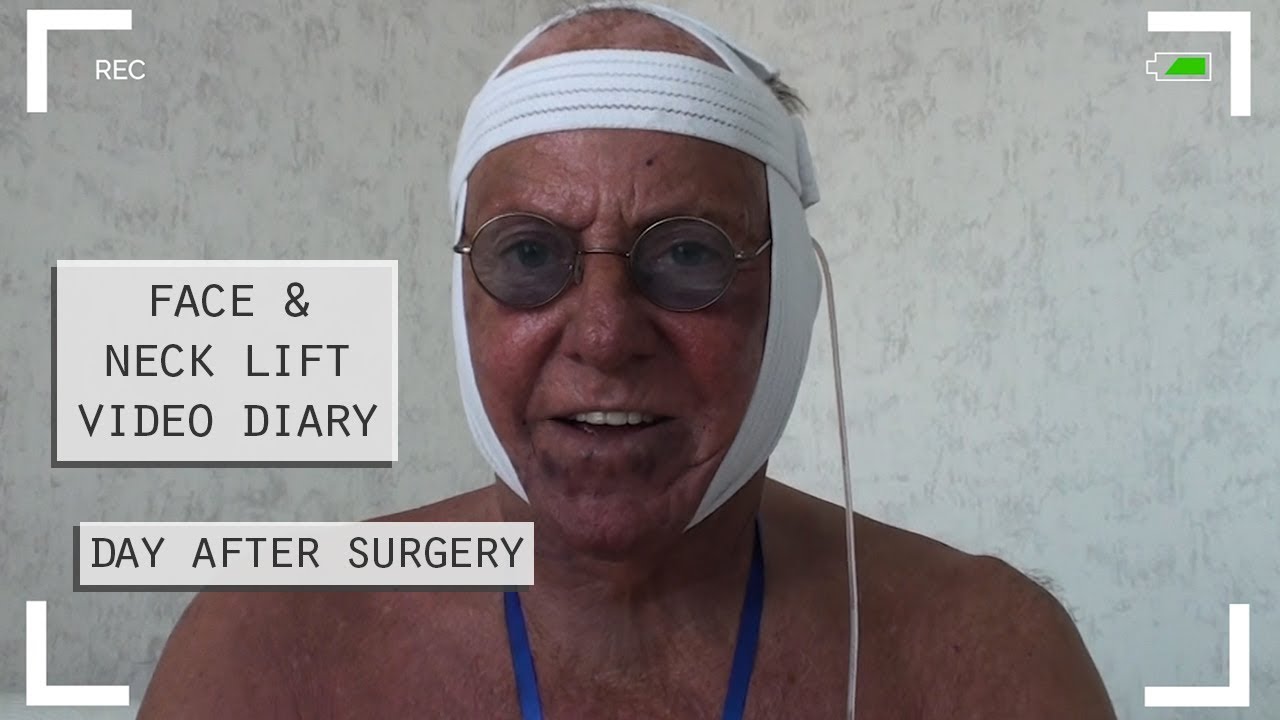
Hear what Dr De Silva’s male patients have to say about their recent facial surgery.
Am I an Ideal Candidate?
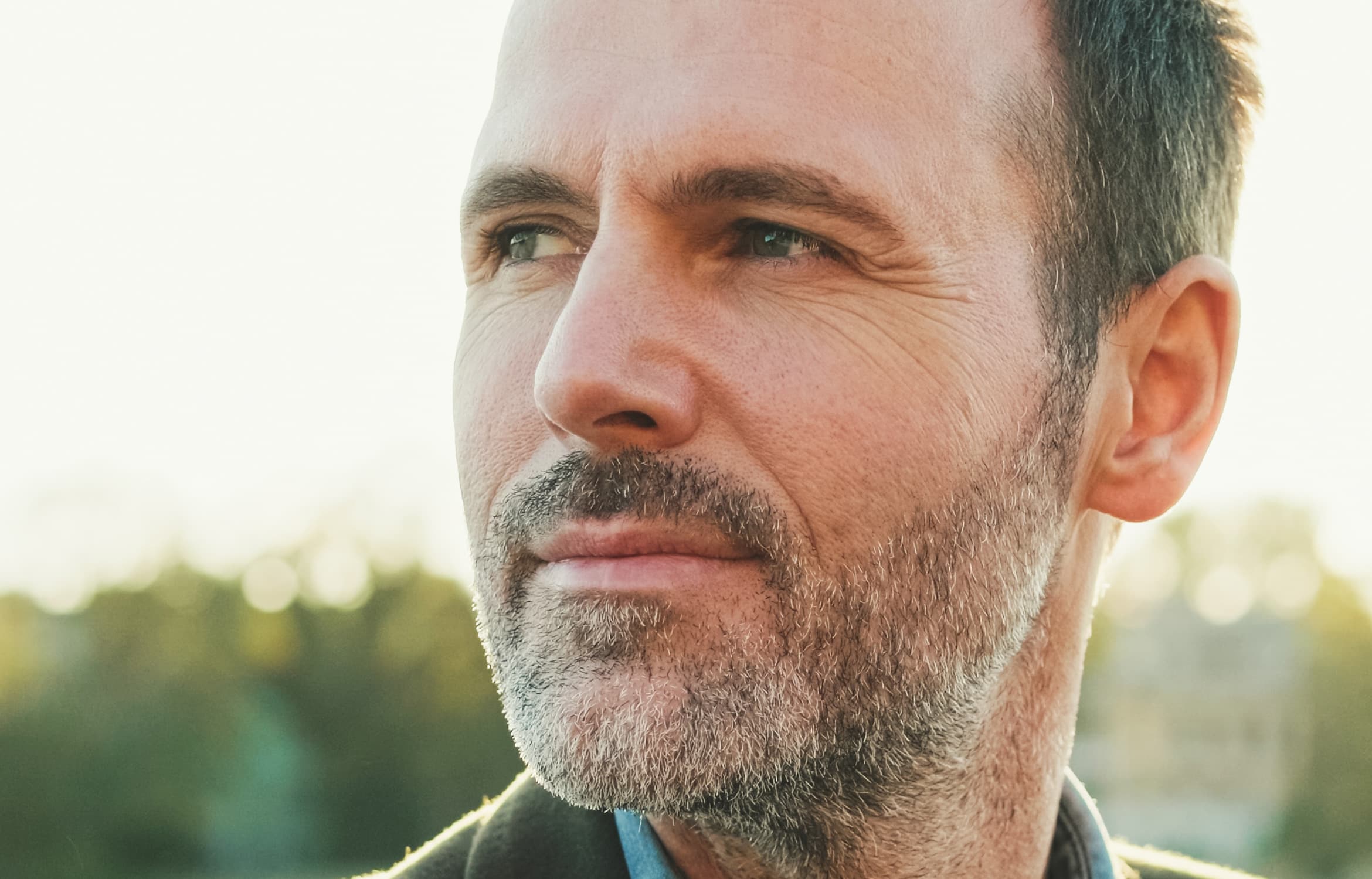
Dr De Silva will assess your individual case in a one-to-one consultation to discuss your aesthetic goals and ensure that surgery is the correct path for you. You may be an ideal candidate for male face and neck surgery if you have a strong bone structure but are starting to experience skin laxity around the jawline and neck. Your goal will be to regain your youthful, masculine appearance and sculpt well-defined angles and contours without looking too overdone.
Results and Recovery
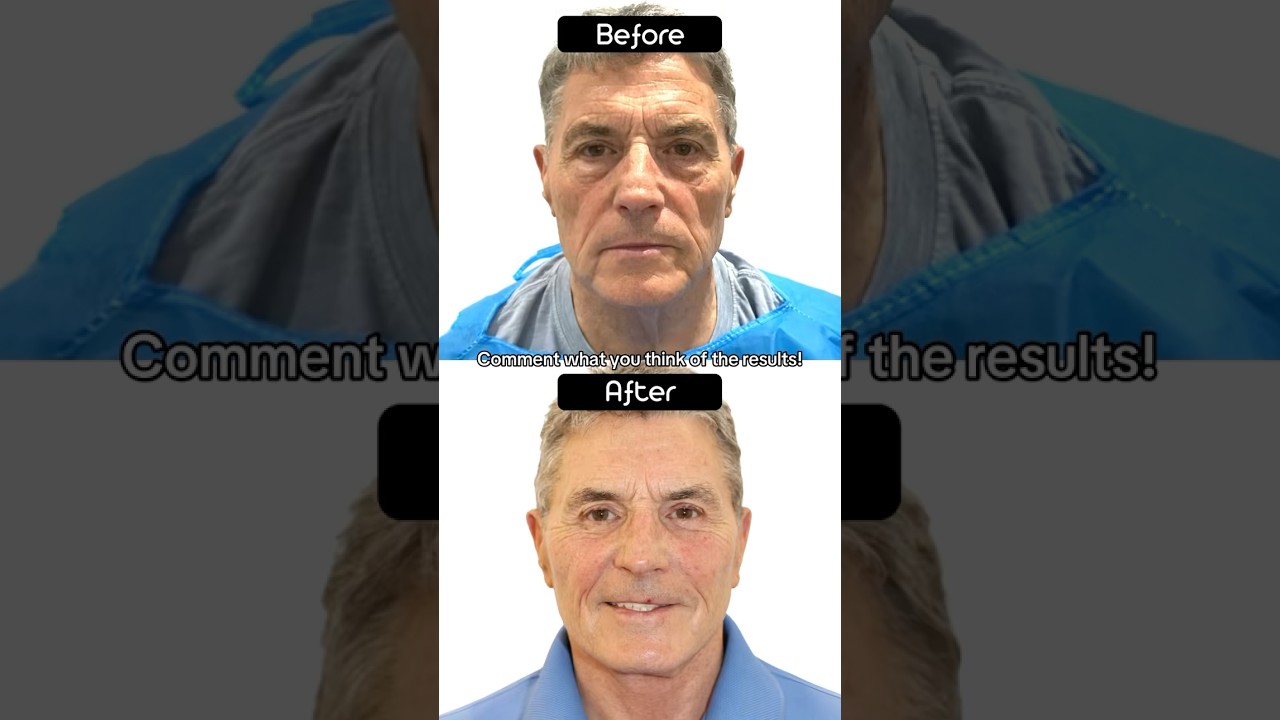
Recovery in men differs physiologically from that in women. Thicker skin, denser facial muscles and a richer blood supply mean swelling and bruising can be slightly greater and take longer to resolve. Dr De Silva’s regenerative approach supports rapid resolution of swelling. It allows most male patients to return to professional or social life within two weeks, with visible improvement continuing for several months.
Growing hair slightly longer around the ears in the first few weeks can help mask early healing marks. Temporary numbness may occur; using an electric razor helps protect healing skin during this stage. When beard-bearing tissue is repositioned behind the ear, some men will later shave a small area there, a normal outcome discussed before surgery.
Choosing a surgeon experienced in the nuances of male facelift recovery ensures incisions settle invisibly and results remain natural, strong, and distinctly masculine.
Even the Best Surgery Comes With Risks
Every surgical procedure involves some level of risk, which Dr De Silva minimises through precise technique, regenerative healing protocols, and advanced monitoring. Complications are rare under Dr De Silva’s care, thanks to rigorous monitoring and a sterile, infection-controlled Harley Street environment.
Every surgical stage and recovery protocol is adapted to the way men heal. Thicker skin and greater vascularity can increase the likelihood of bruising or slower wound resolution, so Dr De Silva employs meticulous haemostasis, regenerative cell therapy, and enhanced aftercare, including oxygen therapy and arnica supplements, to support rapid healing and minimise complications.
Read Our Surgery Reviews
Ready for a More Masculine Profile?
Looking to regain your sharp, chiselled appearance? Trust your face to one of the most prominent facial plastic surgeons in the UK, Dr De Silva.
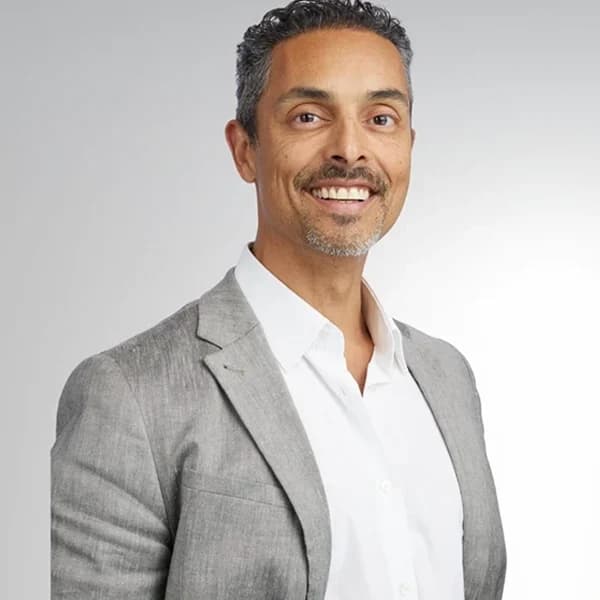
Dr. Julian De Silva is a renowned facial cosmetic surgeon at Harley Street, London, specializing in facelift, blepharoplasty, and rhinoplasty. Known for natural-looking results, he has treated top celebrities and uses advanced technology for fast recovery. Dr. De Silva is also a recognized author and educator in aesthetic surgery.
Frequently Asked Questions
When Is the Best Time For a Male Face and Neck Lift?
When Is the Best Time For a Male Face and Neck Lift?
The ideal time depends on anatomy and goals, but most men choose surgery between their 40s and 60s when jowls or neck laxity first appear. However, the best time depends on your anatomy, ageing process, and goals, not just age alone. If you’re starting to feel that your appearance no longer reflects your energy or confidence, a consultation can help determine whether now is the right time.
How Painful Is Male Facial Surgery?
How Painful Is Male Facial Surgery?
Discomfort is generally mild and well-managed with pain relief. Thanks to twilight sedation and Dr De Silva’s low-trauma surgical techniques, most patients describe the experience as far easier than expected. You’ll likely feel a sense of tightness or pressure in the first few days, but severe pain is uncommon. Many men are surprised by how quickly they feel comfortable resuming light activities.
How Will I Still Look Masculine After a Facelift or Neck Lift?
How Will I Still Look Masculine After a Facelift or Neck Lift?
Dr De Silva’s approach is grounded in preserving and enhancing masculine features, not softening or feminising them. His surgical plan focuses on restoring jawline definition, lifting sagging skin, and refining the neck, without over-tightening. Key structures like beard lines, sideburns, and bone contour are respected throughout, ensuring results that look natural, discreet, and distinctly male.
Do I Need to Shave My Beard Before Surgery?
Do I Need to Shave My Beard Before Surgery?
Yes, you’ll be advised to shave a few days before surgery so Dr De Silva can precisely plan incision placement. This helps preserve beard hair direction and density during healing.
When Can I Grow My Beard Back After a Facelift?
When Can I Grow My Beard Back After a Facelift?
Most patients can resume shaving within 10–14 days and allow beard growth after 2–3 weeks, once incisions are fully sealed. As healing continues, facial hair will return to its natural pattern, with no permanent loss in growth or texture.
Can I Combine My Male Face Surgery With Other Procedures?
Can I Combine My Male Face Surgery With Other Procedures?
Some patients require other procedures to give the very best results. Dr Julian De Silva advises all patients on eyelid changes (blepharoplasty), brow position, volume loss (Fat transfer, implants), and jawline strengthening (e.g. Chin implant). Often, these procedures, when used in conjunction with the golden ratio and masculine facial characteristics, will enhance the result and give the best results. Dr De Silva has published scientific research on male facial proportions and aesthetic balance, including studies on what makes certain male faces, such as Brad Pitt’s, so universally attractive. His jaw line and the relative proportions of his chin and jaw compared to the average jaw line.)
I am Worried About Scars
I am Worried About Scars
Unsatisfactory scars are caused by a combination of factors, including surgical technique, the position of scars, closure techniques (stitches vs staples) and genetics (1% of patients can have healing issues with scars secondary to their genetics). Dr De Silva’s technical skill and male-focused approach create barely there scars that are almost invisible once fully healed.
Will People Notice I’ve Had Surgery?
Will People Notice I’ve Had Surgery?
Most male patients report that friends and colleagues simply comment on how rested or healthy they look. The surgical approach is designed to refresh appearance, not alter facial identity.
Is This Procedure Suitable for Men With Receding Hairlines or Short Hair?
Is This Procedure Suitable for Men With Receding Hairlines or Short Hair?
Yes. Incisions are planned around individual hair patterns, and in cases of recession or thinning, they are adjusted to remain invisible even with short hair.