Rapid weight loss from GLP-1 medications such as Ozempic, Wegovy and Mounjaro removes fat from the face faster than the skin can adapt, producing hollow cheeks, deeper folds, jowls and a loose neck. This is widely called "Ozempic face." The surgical correction is not a simple skin tightening. Because the face has lost both volume and support, the reliable answer combines a deep-plane facelift to reposition the deeper structures with autologous fat transfer to replace the lost volume. At my Harley Street practice I treat this with the Vertical Face Restore, a vertical deep-plane technique designed to lift the face upward against gravity and restore a natural, rested appearance rather than a pulled one.
What "Ozempic face" actually is
GLP-1 medications work by reducing appetite and body fat, and the face is one of the first areas to show it. The deep fat pads that give a youthful face its support and curve shrink quickly. When that volume disappears over a few months, three things tend to happen together:
- Volume loss. Cheeks flatten, temples and under-eyes hollow, and the face can look gaunt or tired.
- Skin laxity. Skin that was filled out now has nothing to drape over, so it sags into jowls and folds.
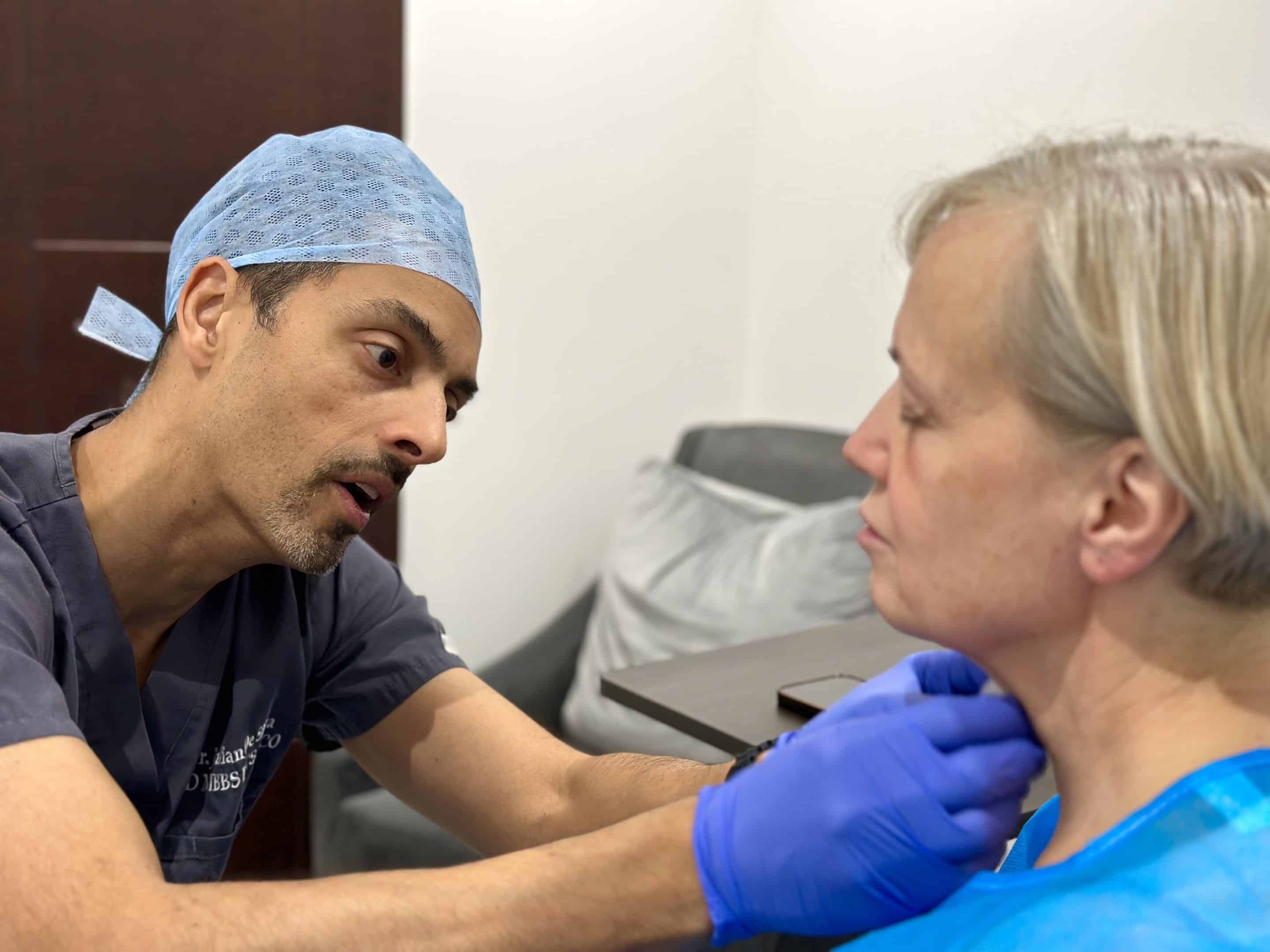
- Neck and jawline change. The jawline softens and the neck loosens, often the change that bothers patients most.
The key point most patients do not realise is that the facial change after GLP-1 weight loss is estimated to be two to three times greater than the change seen after similar weight loss from diet alone. That is why the face after Ozempic or Mounjaro usually needs both lifting and volume restoration, not one or the other.
Surgical or non-surgical? An honest guide
Not everyone who notices "Ozempic face" needs surgery, and I will always say so in consultation. The honest dividing line is this:
- Mild, early changes with firm skin: non-surgical volume restoration may be enough as a first step. This is a holding measure, not a structural fix.
- Established jowls, neck laxity or significant volume loss: non-surgical treatment cannot lift loose tissue or rebuild the deep support. Surgery is the durable answer, and trying to fill your way out of true laxity tends to look heavy and unnatural.
I do not offer or recommend treatments that are not properly evidenced. Volume in my surgical plans is restored with your own fat through fat transfer and supported with PRP.
Why the deep-plane technique suits the post-GLP-1 face
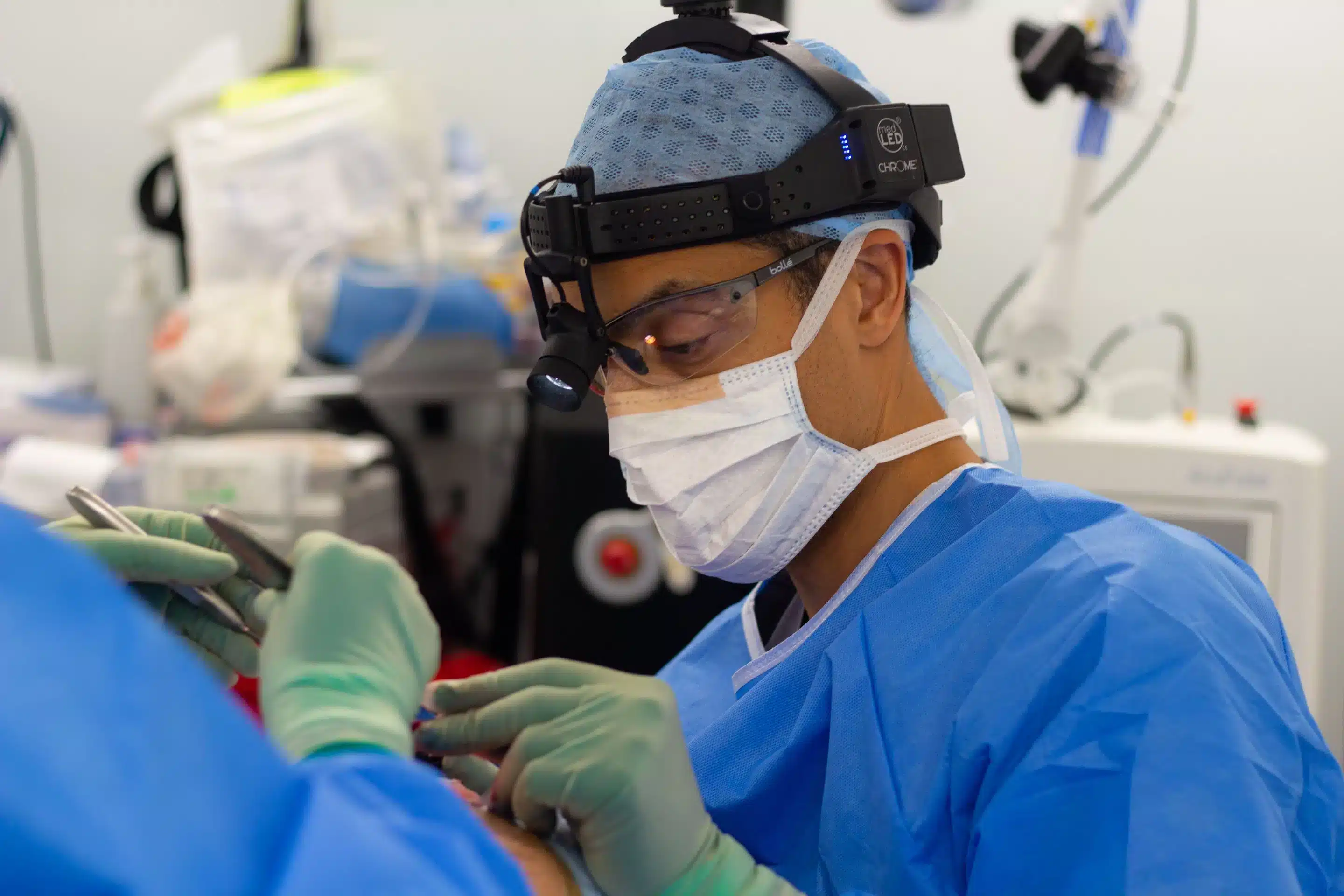
A traditional facelift pulls the skin sideways and tightens it. On a face that has lost its underlying fat, that approach has very little to work with and risks a tight, windswept look. The deep-plane technique works underneath the muscle layer, releasing the deep retaining ligaments and repositioning the deeper structures as one unit. There is no tension on the skin, so the result moves naturally and the scars settle as fine lines.
For the post-GLP-1 face this matters for two reasons. First, the deeper structures are lifted vertically, counteracting the downward drop that the weight loss exaggerated. Second, the lift is combined in the same operation with fat transfer to put back the volume the medication took away. Lifting alone leaves a slim, hollow result. Volume alone leaves heaviness without support. The two together restore the face.
The Vertical Face Restore approach
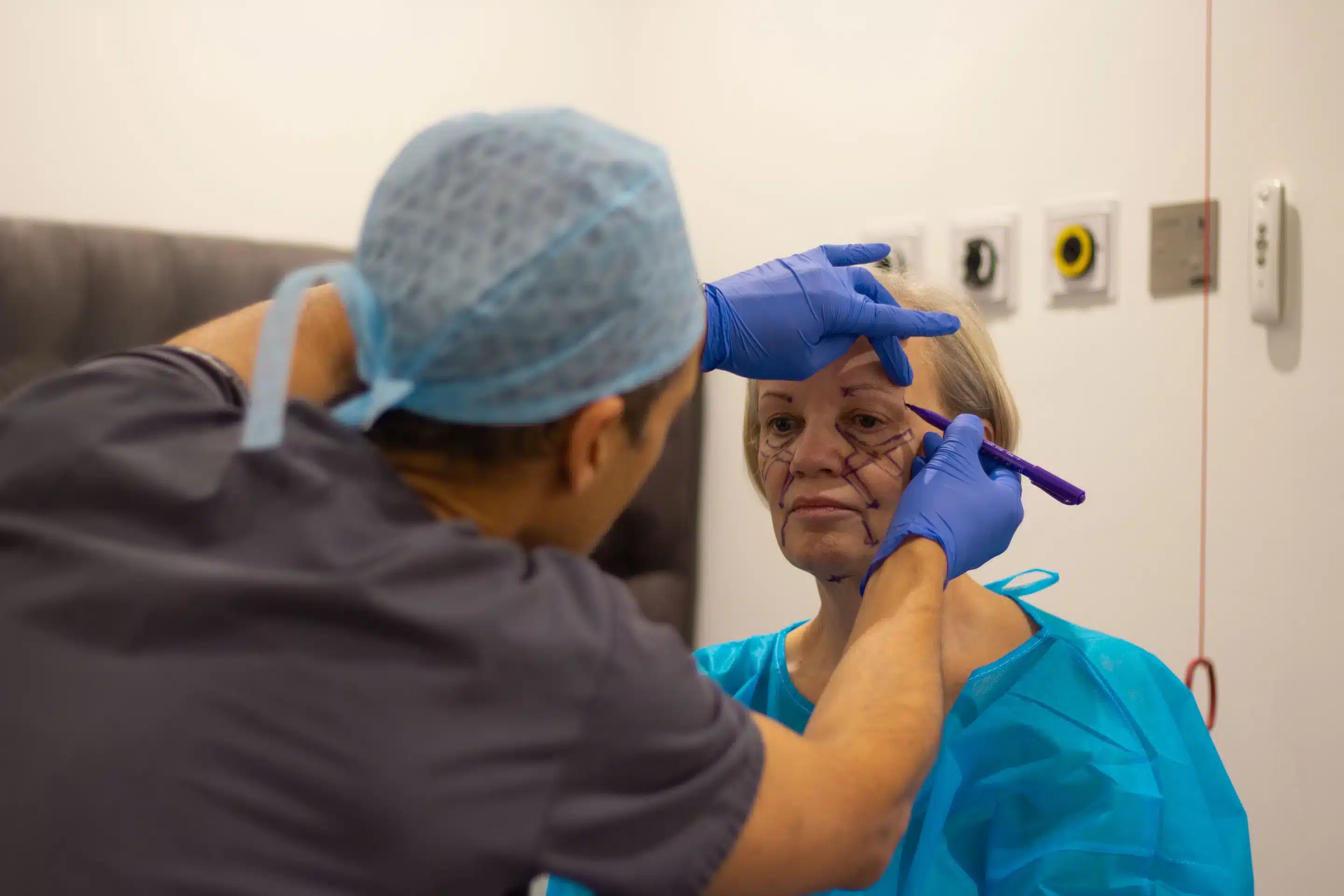
The Vertical Face Restore is my structured approach to comprehensive facial rejuvenation, and it adapts well to the post-weight-loss patient because it addresses support, volume, eyes, skin and recovery in one customised plan rather than as piecemeal treatments. For a GLP-1 patient the plan typically centres on:
- Vertical deep-plane facelift and neck lift to rebuild the jawline and neck.
- Fat transfer to restore cheek, temple and mid-face volume using your own tissue.
- Eye and brow refreshment where rapid weight loss has hollowed or tired the eyes.
- Twilight (sedation) anaesthesia with enhanced recovery, avoiding general anaesthetic where appropriate and supporting healing with PRP and oxygen therapy.
Every plan is decided with you in consultation and tailored to your anatomy and goals.
Timing: when to have surgery after Ozempic or Mounjaro
The single most important rule is to operate on a stable face. I generally advise waiting until your weight has been stable for at least three to six months before facial surgery, so the result is built on a foundation that will not keep changing underneath it. Current guidance on whether to pause a GLP-1 medication around surgery is something I will review individually with you and your anaesthetist, as recommendations are evolving. Good nutrition before and after surgery genuinely helps healing, and we will talk about that too.
Why patients choose Dr Julian De Silva
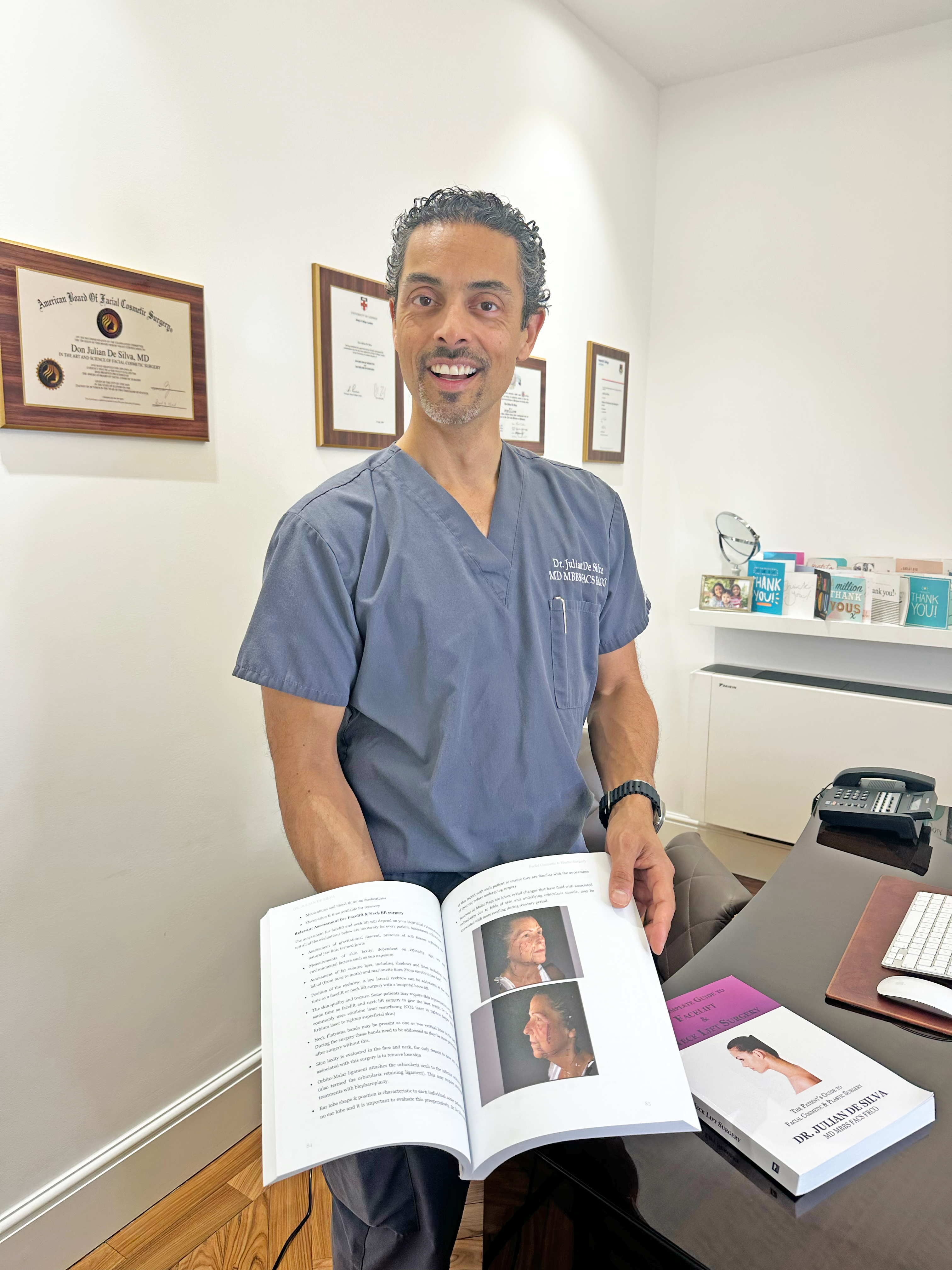
I operate only on the face and neck. That single focus, over many years on Harley Street, is what allows the precision this work needs. My practice is recognised in the Tatler Beauty and Cosmetic Surgery Guide, I have published widely on facial surgery, and my patients have left more than a thousand reviews. Most importantly for the post-GLP-1 patient, I treat this as a problem of restoring identity and natural proportion, not just removing skin.
Related reading
Restore your face after weight loss. Book a private consultation with Dr Julian De Silva at 23 Harley Street to discuss whether surgery, or a non-surgical first step, is right for you. Book a consultation.