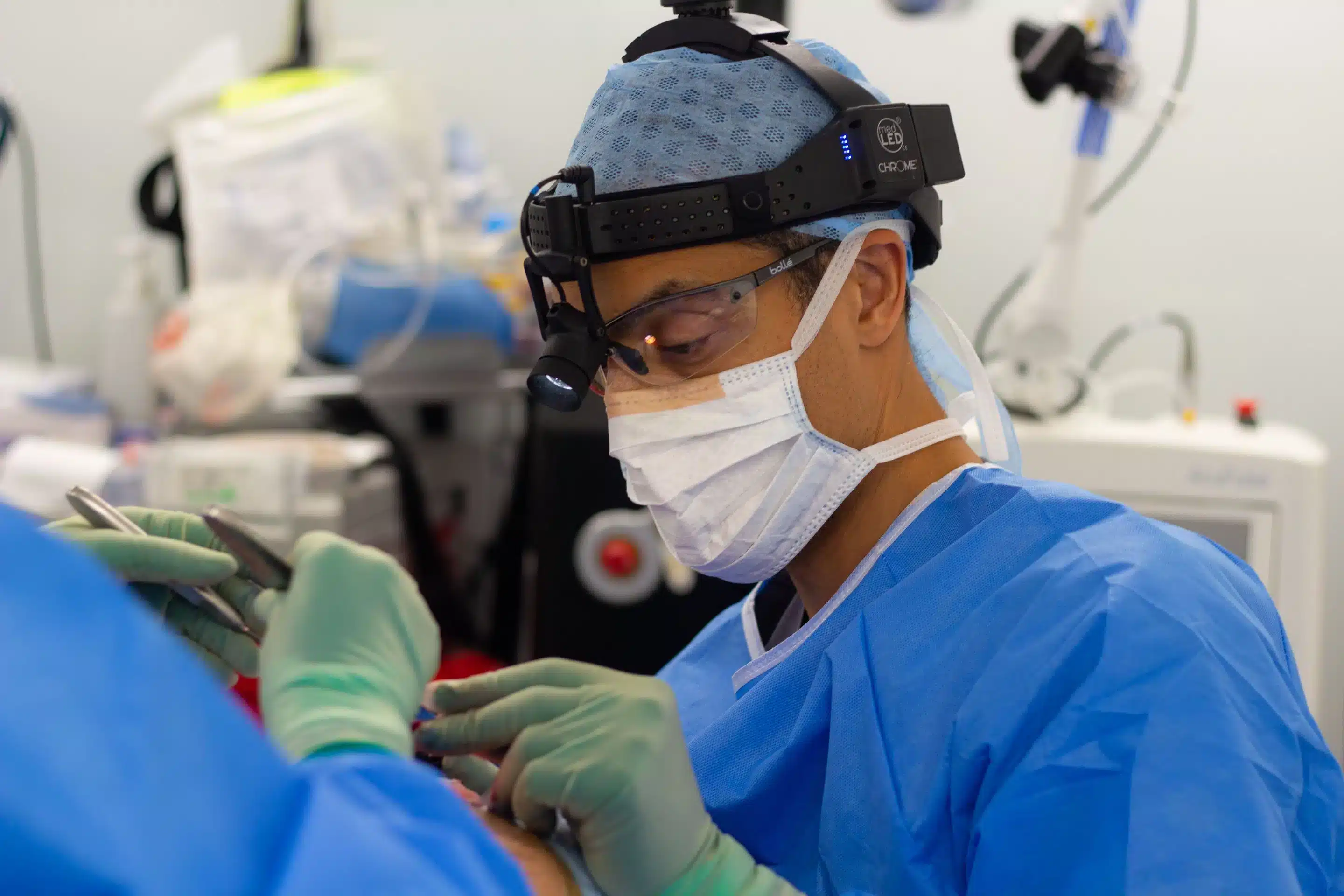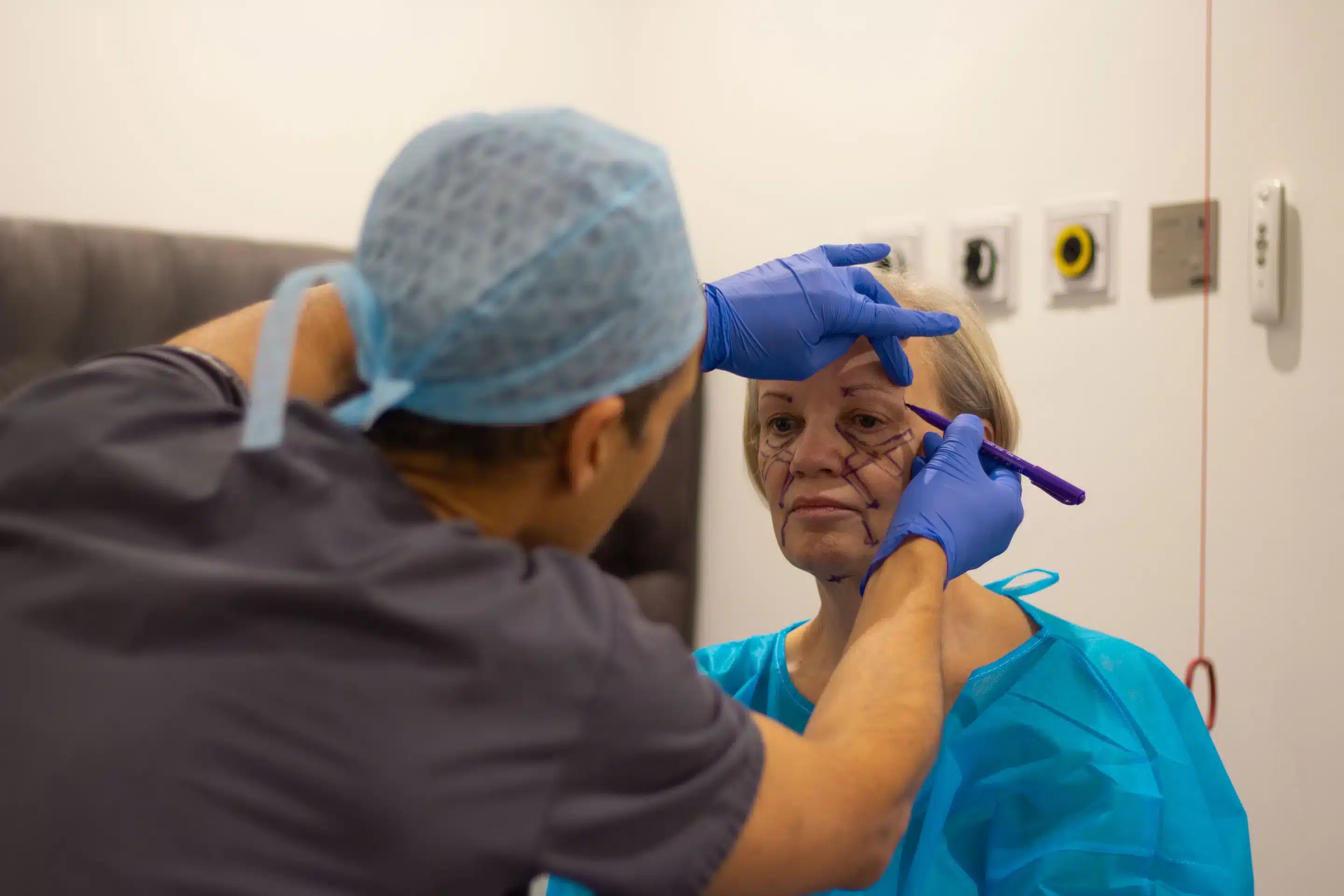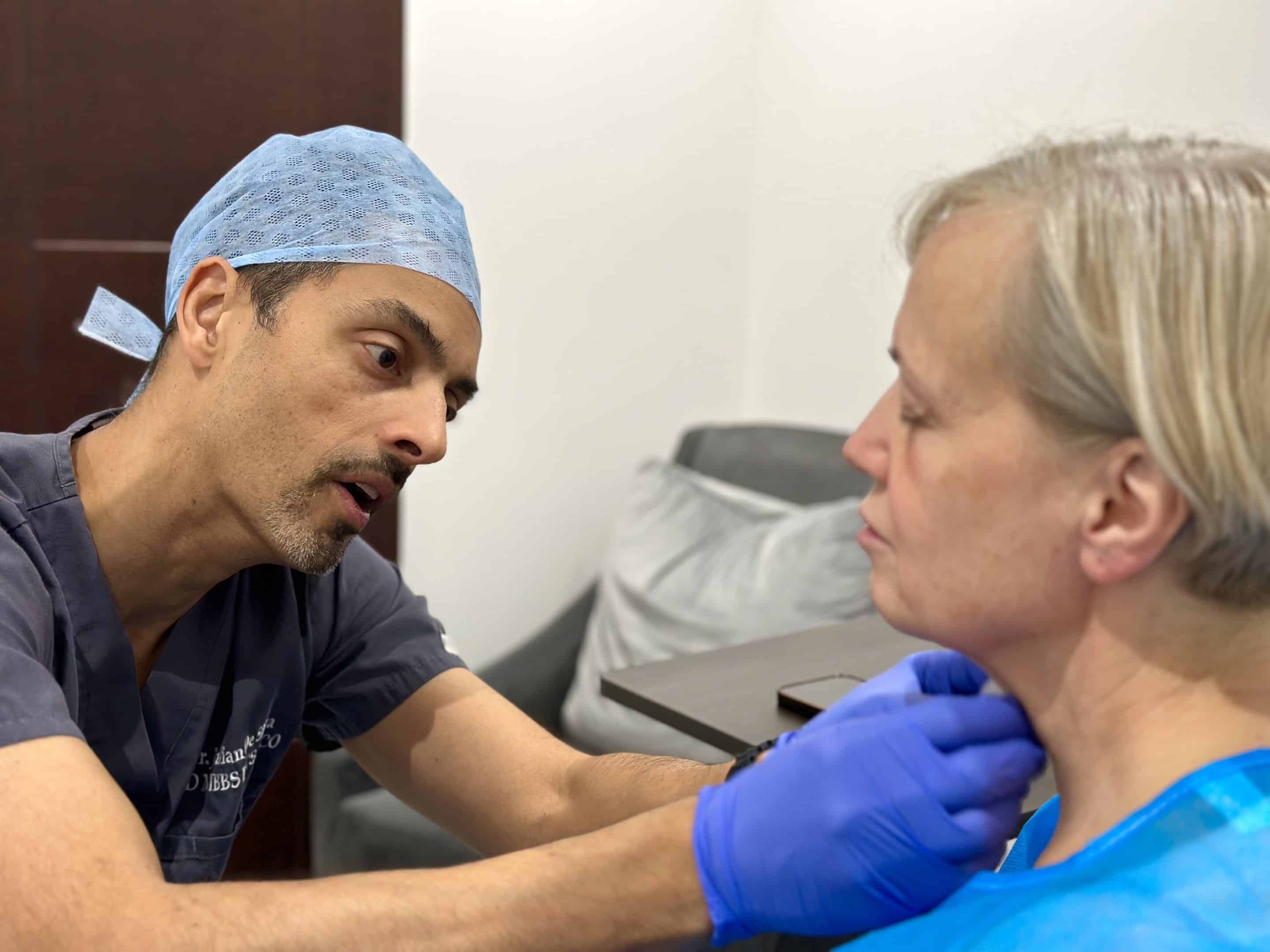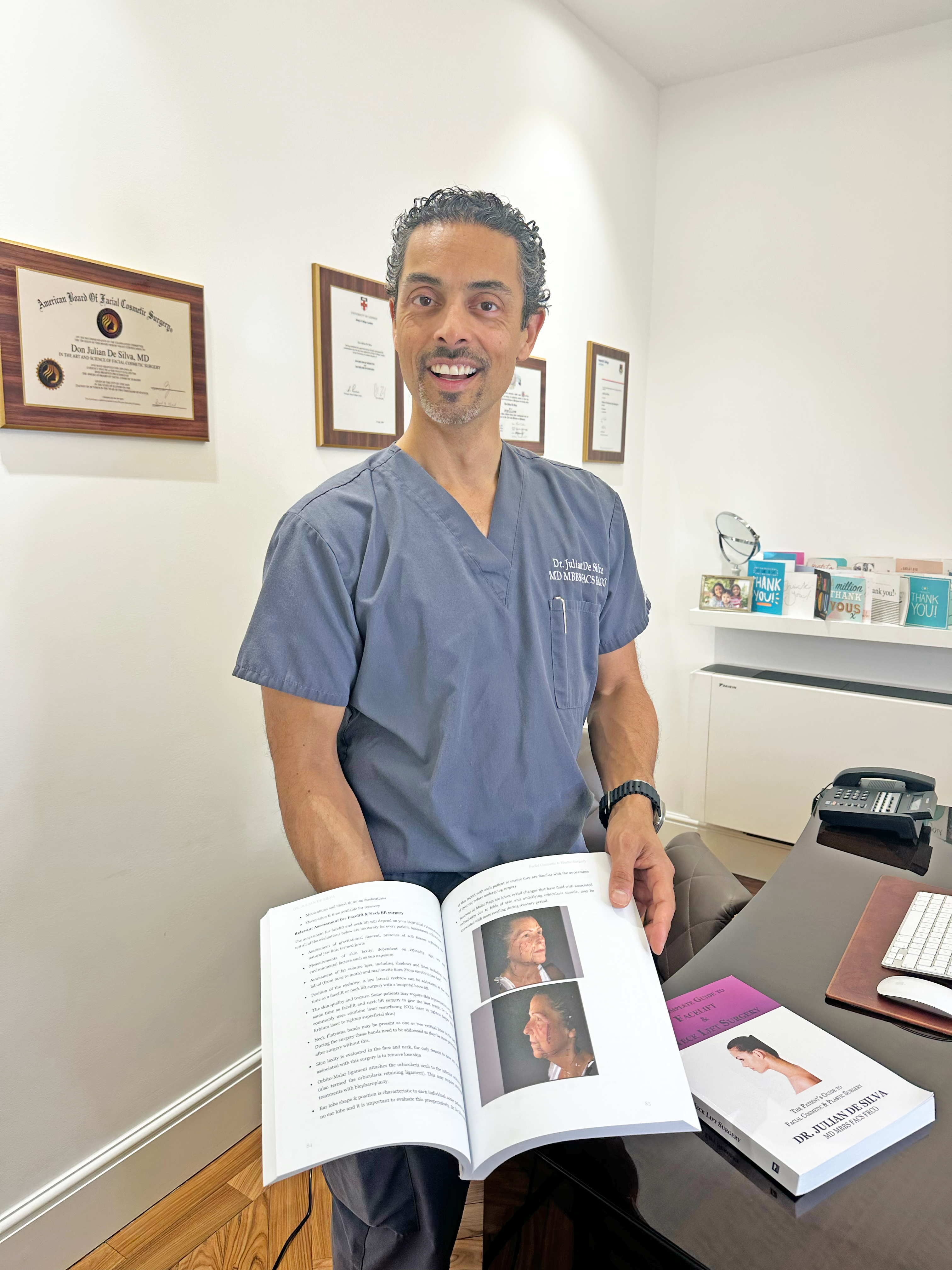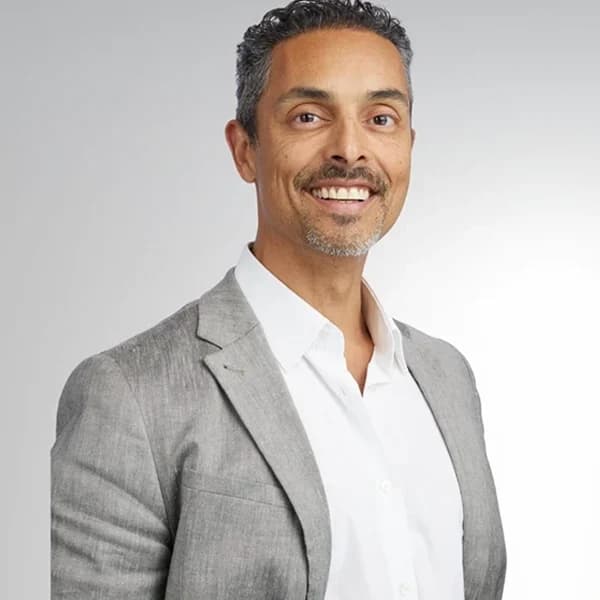
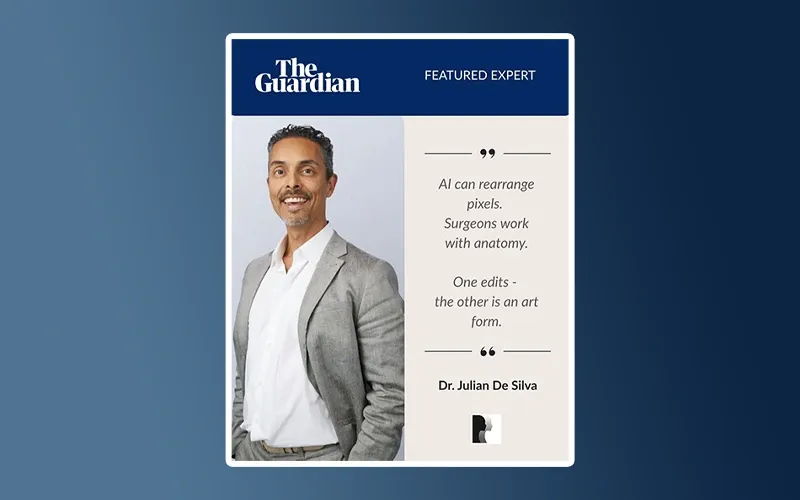
A recent The Guardian article explored the growing number of patients bringing AI-generated images to cosmetic surgery consultations. Dr Julian De Silva, a Harley Street facial plastic surgeon, was quoted in the article discussing one of the most important distinctions patients need to understand: AI can alter pixels, but surgery must work with real anatomy.
Artificial intelligence is now influencing almost every part of modern life, including the way people imagine their own faces. With a few prompts, AI tools can refine a nose, sharpen a jawline, lift the eyes, smooth the skin, and create a version of the face that appears more symmetrical or idealised.
This is an important conversation. AI-generated images can be useful as a starting point for discussing aesthetic goals, but they should never be treated as a surgical blueprint.
The difference between an AI image and a surgical result
AI can create a face that looks instantly balanced because it is not limited by anatomy, healing, skin quality, bone structure, or the natural ageing process. It can move features, change proportions, erase asymmetry, and create skin texture that may not be achievable in real life.
One example discussed in the Guardian article is eye symmetry. AI can make one eye appear slightly higher or lower within seconds. In real surgery, however, the position of the eyes is determined by the underlying bone structure. As Dr De Silva explained: “You cannot safely change the position of the orbits.”
This is why expert facial analysis is so important. A consultation is not simply about asking what the patient wants changed. It is about understanding what can be safely and naturally improved while preserving the individual’s identity.
Why AI-generated faces follow the same patterns
AI-generated faces often follow familiar beauty patterns: smoother skin, sharper contours, stronger jawlines, more lifted eyes, refined noses, and increased facial symmetry. The Guardian article notes that Dr De Silva has observed how AI images often default to widely recognised ideals of facial beauty, including V-shaped jawlines, fuller upper eyelids in men, and heart-shaped facial proportions in women.
The problem is that no feature exists in isolation from the rest of the face. A nose that looks ideal in an AI image may not suit the patient’s facial proportions. A sharper jawline may not look natural with the patient’s bone structure or skin quality. A more lifted eye shape may not be surgically appropriate or safe.
True facial aesthetics is not about copying a digital image. It is about balance, proportion, and restraint.
Natural results require surgical judgement, not digital perfection
Dr De Silva’s practice focuses exclusively on facial procedures, including facelift, rhinoplasty, and blepharoplasty, with an emphasis on natural-looking results and facial harmony.
That specialisation matters because even small changes to the face can affect the overall expression. A refined nose can make the eyes appear more balanced. Eyelid surgery can make the face look more rested, but too much correction can make the result look unnatural. A facelift or neck lift should restore definition without creating a tight or overdone appearance.
AI images can make every feature look “perfect,” but real cosmetic surgery should not erase individuality. The most successful results are usually the ones that help the patient look refreshed, balanced, and still recognisably themselves.
The risk of unrealistic before-and-after images
Another important point raised in the Guardian article is the concern that some dramatic cosmetic surgery content online may itself be AI-generated or digitally manipulated. Dr De Silva described reviewing one striking transformation and noticing that “the hands had six fingers.”
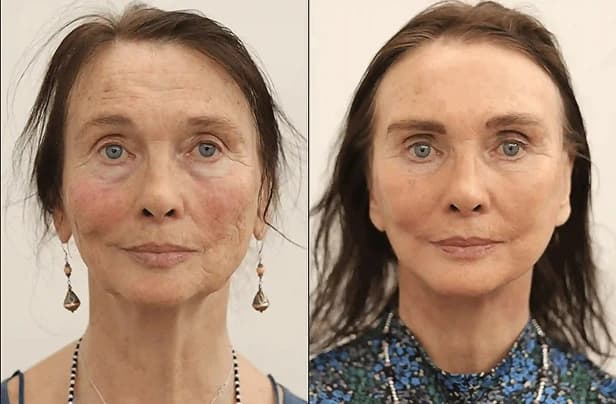
For patients, this is a reminder to be careful about what they see online. Before-and-after images can be helpful, but they should be reviewed critically. Lighting, angles, facial expression, makeup, editing, and now AI can all influence how results appear.
When considering facial cosmetic surgery, patients should look for consistent, natural results, clear explanations, and a surgeon who is willing to explain what is realistic rather than simply agreeing to an image.
How patients should use AI images before a consultation
AI images do not need to be dismissed entirely. They can help patients communicate what they like, what concerns them, and what type of aesthetic direction they are drawn to. However, they should be used as a conversation tool, not a promise of outcome. In a responsible consultation, these are the questions that actually matter:
- What would you like to improve, and how has your thinking about it changed over time?
- Is the requested change anatomically possible?
- Would the change suit your face as a whole?
- Can the result be achieved safely?
- Will the result still look natural as you age?
This is where the role of an experienced facial plastic surgeon becomes essential. The goal is not to recreate an AI image. The goal is to understand the patient’s face, anatomy, proportions, and long-term goals, then recommend a treatment plan that is safe, realistic, and refined.
The future of AI and cosmetic surgery
AI will likely continue to influence aesthetic trends. Patients may arrive with more edited images, more digital references, and more specific ideas of what they want to change. But the fundamentals of excellent facial cosmetic surgery remain the same: anatomy, safety, proportion, artistry, and judgement.
The face is not a digital file. It moves, heals, ages, and expresses emotion. Cosmetic surgery must respect that complexity.
For patients considering rhinoplasty, blepharoplasty, facelift, neck lift, or another facial procedure, the best starting point is not an AI-generated image. It is a detailed consultation with a specialist who understands both the possibilities and the limits of facial surgery.
Considering facial cosmetic surgery in London?
Dr Julian De Silva is a Harley Street facial plastic surgeon who specialises exclusively in surgery of the face, eyes, nose, and neck. His approach focuses on natural-looking results, careful facial analysis, and long-term balance.
If you are considering facial cosmetic surgery and have been influenced by AI images or online before-and-after results, a consultation can help you understand what is realistic for your own anatomy. That conversation is where the process should begin.