


Ponytail Facelift London
A Minimal Scar Facelift in London by Dr De Silva uses hidden hairline incisions and facial-only expertise to create natural, subtle results for patients in their 30s and 40s with early signs of ageing.
Board-certified
UK/EU/USA
>1,000
rhinoplasties
Author:
The Complete Guide to Rhinoplasty
CQC-accredited clinic
What Is a Ponytail Facelift?
Many patients describe the same thing. Not a dramatic change, but a gradual shift. A softening of the cheeks. A slight heaviness around the temples. The face begins to feel a little less like itself, in a way that is hard to pinpoint but impossible to ignore.
The ponytail facelift addresses this early and precisely. Small incisions, hidden entirely within the hairline, lift and reposition the mid-face and temple tissue, restoring the natural openness the upper face once had. Without extensive surgery. Without a long recovery. The result is simply a more rested, refreshed version of you.
Each procedure is guided by Dr De Silva's Golden Ratio facial analysis, ensuring the lift is calibrated precisely to your individual proportions, never a template applied to every face.
Featured In








Ponytail Facelift at a Glance

Surgery Time
Hospital Stay
Anaesthetic
Time Off Work
Return To Routine
Exercise
Recovery (Social)
Full Result
Ponytail Facelift Patient Results
Browse before and after results from Dr De Silva’s ponytail lift and minimally invasive facelift patients.
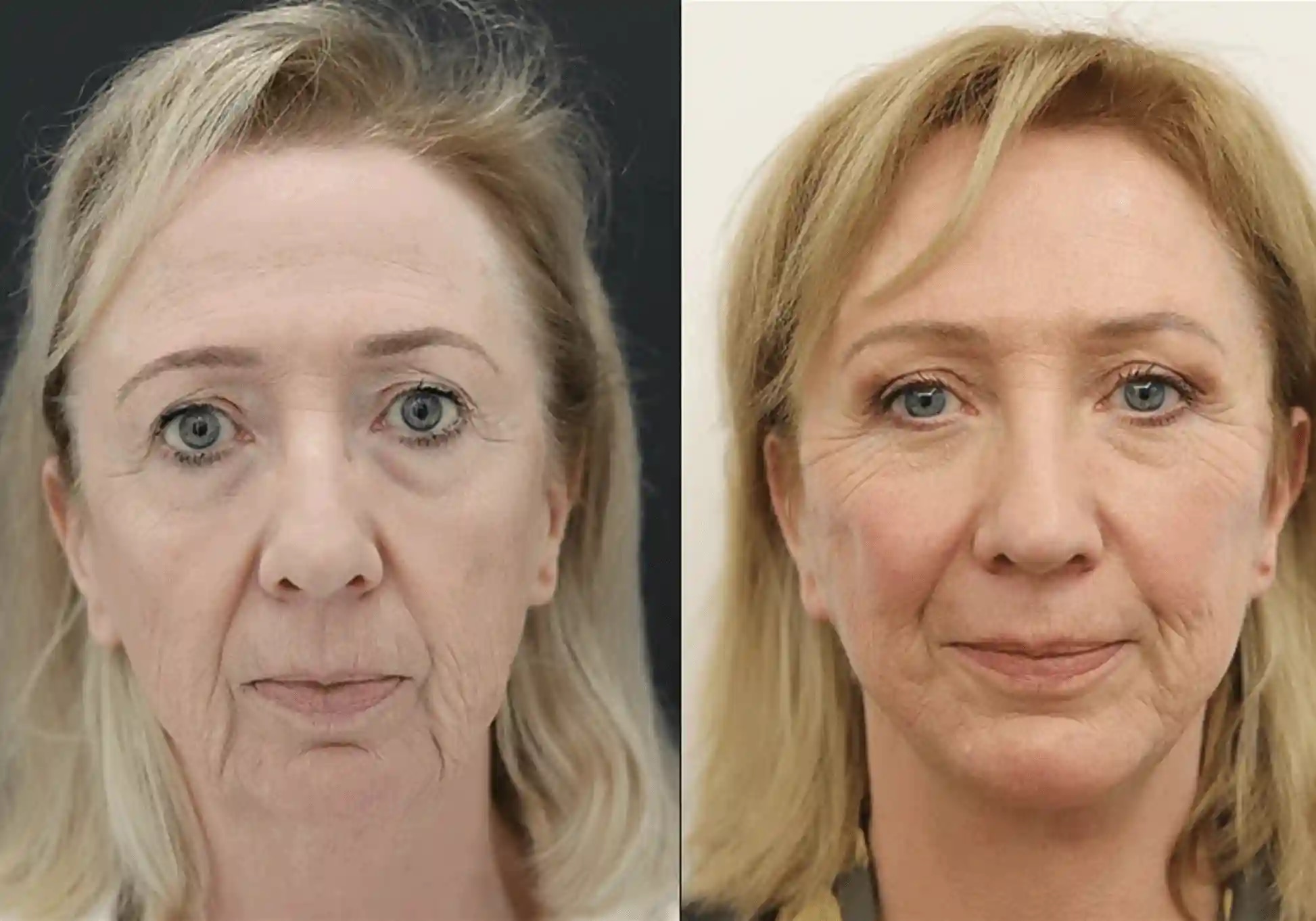
A more youthful natural appearance was restored by Dr Julian De Silva’s using his signature Vertical Deep Plane Facelift Restore.
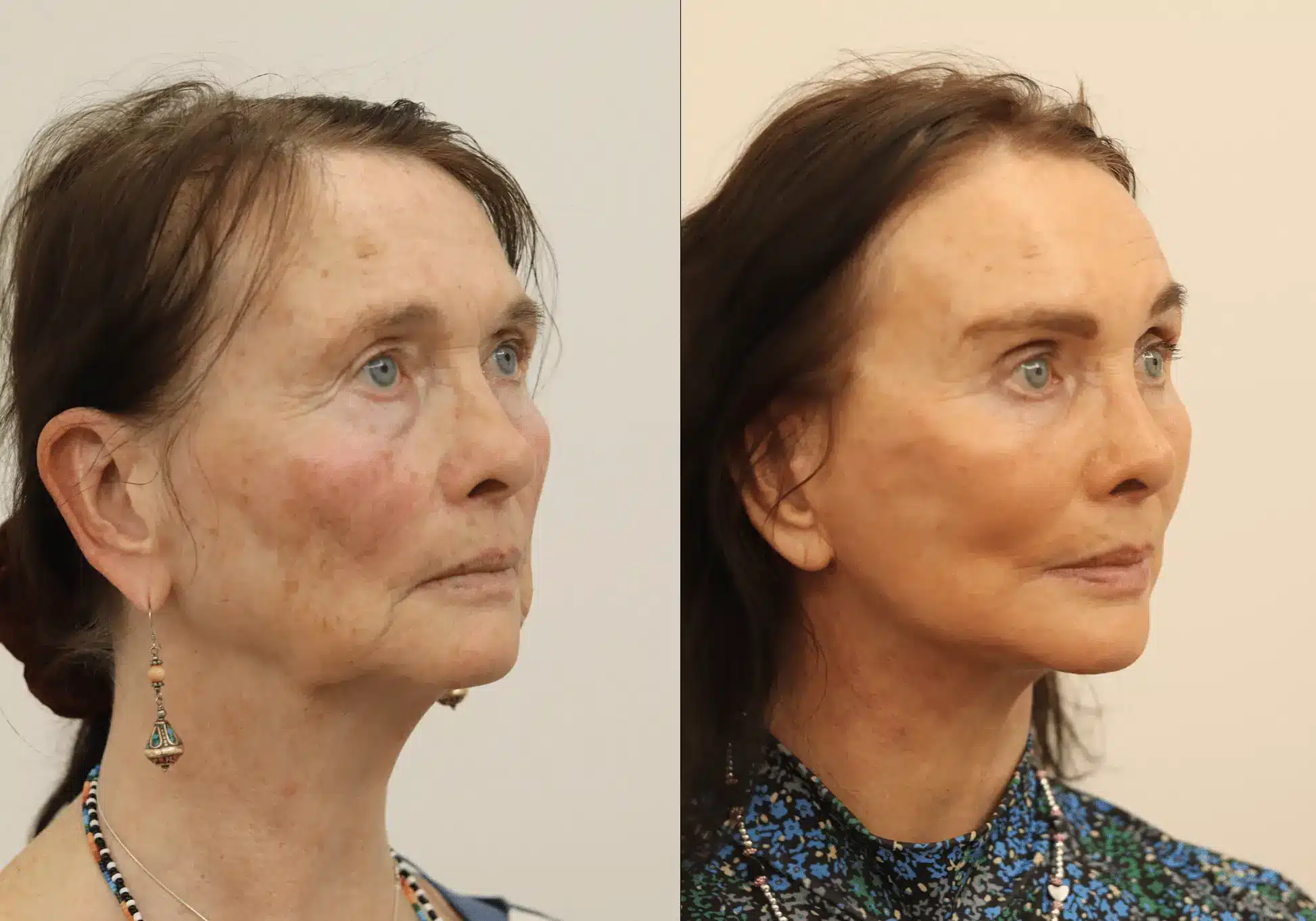
A refreshed, natural transformation. This lovely patient underwent Dr. Julian De Silva’s signature facelift, neck lift, and fat transfer to restore youthful volume, smooth loose skin, and redefine her jawline—achieving a beautifully rejuvenated look without changing her unique features.
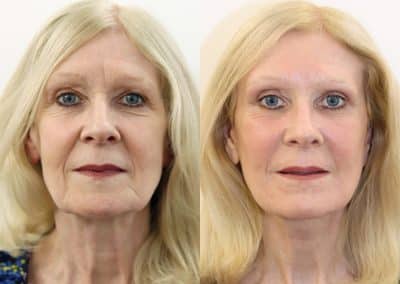
This lovely patient in her 50s wanted a fresher look. Dr. De Silva performed a deep plane facelift and neck lift to restore her jawline, lift her cheeks, and smooth her neck. She looks rejuvenated—and most importantly, natural.
A more youthful natural appearance was restored by Dr Julian De Silva’s using his signature Vertical Deep Plane Facelift Restore.
A refreshed, natural transformation. This lovely patient underwent Dr. Julian De Silva’s signature facelift, neck lift, and fat transfer to restore youthful volume, smooth loose skin, and redefine her jawline—achieving a beautifully rejuvenated look without changing her unique features.
This lovely patient in her 50s wanted a fresher look. Dr. De Silva performed a deep plane facelift and neck lift to restore her jawline, lift her cheeks, and smooth her neck. She looks rejuvenated—and most importantly, natural.
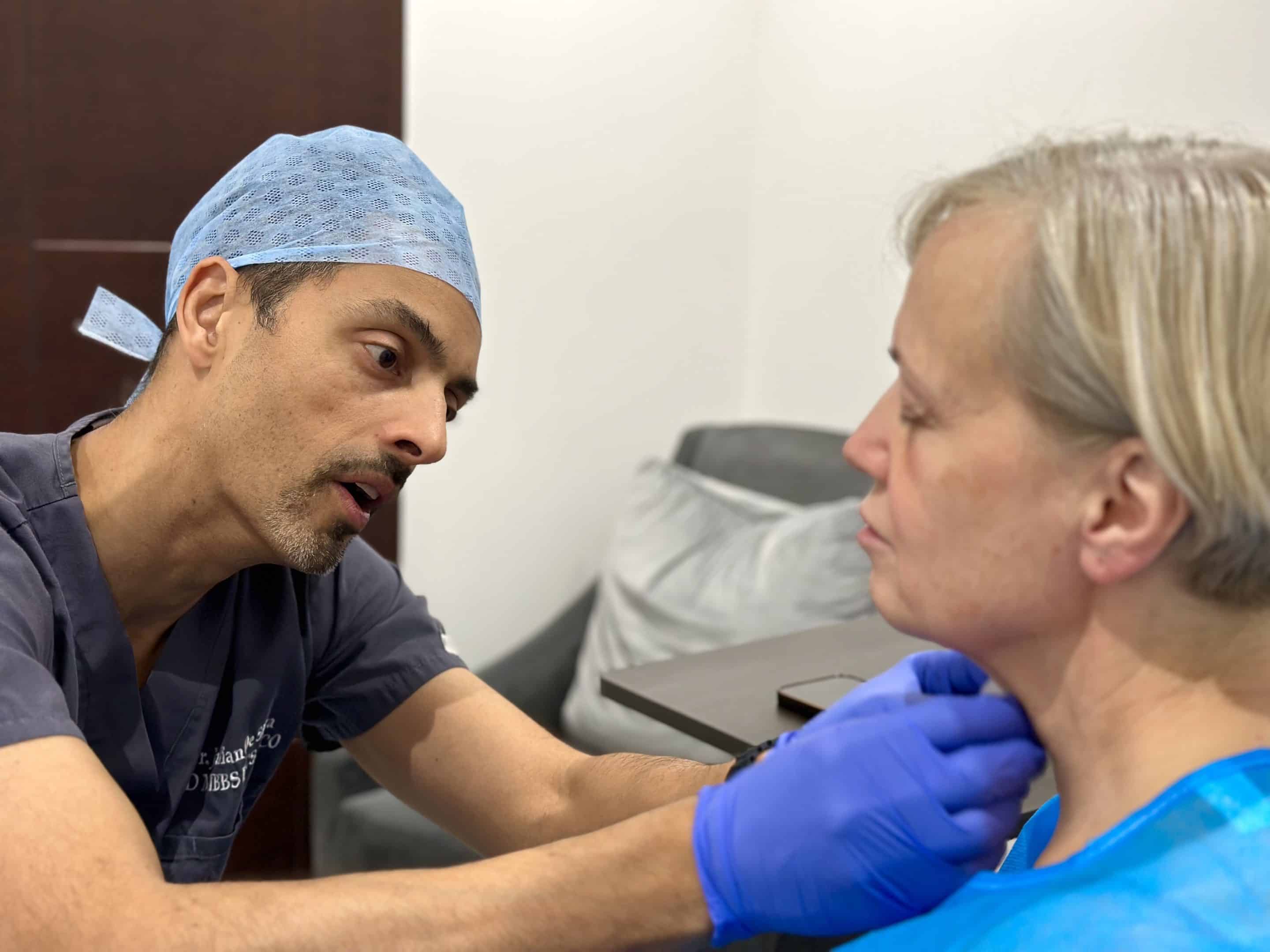
Am I a Good Candidate for a Ponytail Facelift?
The ponytail facelift is designed for patients in their 30s to late 40s with early signs of facial ageing who are not yet ready for a more comprehensive procedure. You may be a suitable candidate if you have:
- Mild sagging or descent of the cheeks or mid-face
- Early hollowing of the temples
- Nasolabial lines beginning to deepen
- A general softening of the lifted, open quality of the upper face
- Good skin elasticity — the technique works with tissue rather than removing significant excess skin
The procedure is not suited to patients with significant jowls, loose neck skin, prominent platysmal banding, or advanced skin laxity. For these concerns, a more comprehensive approach such as the Vertical Face Restore 7 (VFR7) deep plane technique, will deliver a more meaningful and lasting result. Dr De Silva will advise honestly at consultation on which approach is right for your anatomy.
What a Ponytail Facelift Can Treat
From the mid-30s onwards with timing influenced by genetics, lifestyle and sun exposure — the mid-face tissues gradually descend, the temples begin to hollow, and the natural openness of the upper face softens. This procedure specifically addresses these early-stage changes.
Mid-Face Descent
The malar fat pad descends with age, flattening the mid-face and deepening nasolabial lines. The ponytail lift repositions this tissue upward, restoring the natural, youthful contour of the cheek.
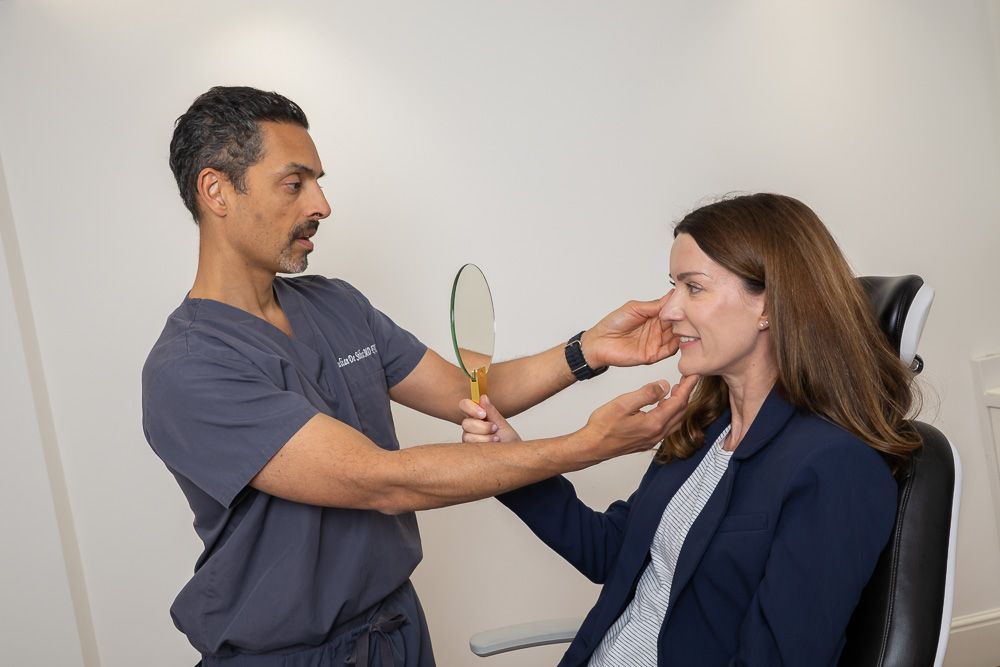

Why Patients Choose Dr De Silva for a Ponytail Facelift in London
Dr De Silva has dedicated his practice exclusively to facial surgery for more than fifteen years, and for many patients considering their first procedure, his approach to anaesthesia matters most. All surgery is performed under his patented Rapid Recovery Twilight Sedation (RRTS, UK Patent GB2602123B), developed over a decade as a genuinely gentler alternative to general anaesthetic. Patients breathe independently throughout, wake clearly, and are typically ready to leave the clinic within an hour of surgery completing. In clinical audit, patients rated their experience an average of 9.4 out of 10, and fewer than one percent experience nausea.
Every procedure is also supported by ARTISS fibrin tissue glue, used in place of surgical drains and backed by Dr De Silva's own randomised controlled trial. It reduces bruising, shortens recovery and contributes to a haematoma rate of below one percent. The lift itself is guided throughout by his proprietary Golden Ratio facial analysis, ensuring results that are individual, precise and entirely natural.
facelift surgeries performed
What to Expect From Ponytail Lift Recovery
Recovery is notably faster than from a traditional technique, one of its key advantages for patients with active professional and social lives. Most experience mild swelling and bruising in the first one to two weeks, resolving more quickly because incisions are smaller and the procedure less extensive.
Sun exposure should be avoided for a minimum of six months, with SPF 30 or higher applied consistently outdoors. Dr De Silva provides personalised aftercare guidance for every patient.
Rest at home with head elevated. Mild swelling and tightness are normal. Cool compresses help; strenuous activity avoided.
Sutures or dressings reviewed. Bruising begins to settle; most patients feel considerably more comfortable.
Most patients return to light work and social activities. Initial result visible; some residual swelling remains.
Gentle exercise resumes. Facial contours refine as swelling resolves.
Full result visible as deeper tissues heal and the lift settles naturally.
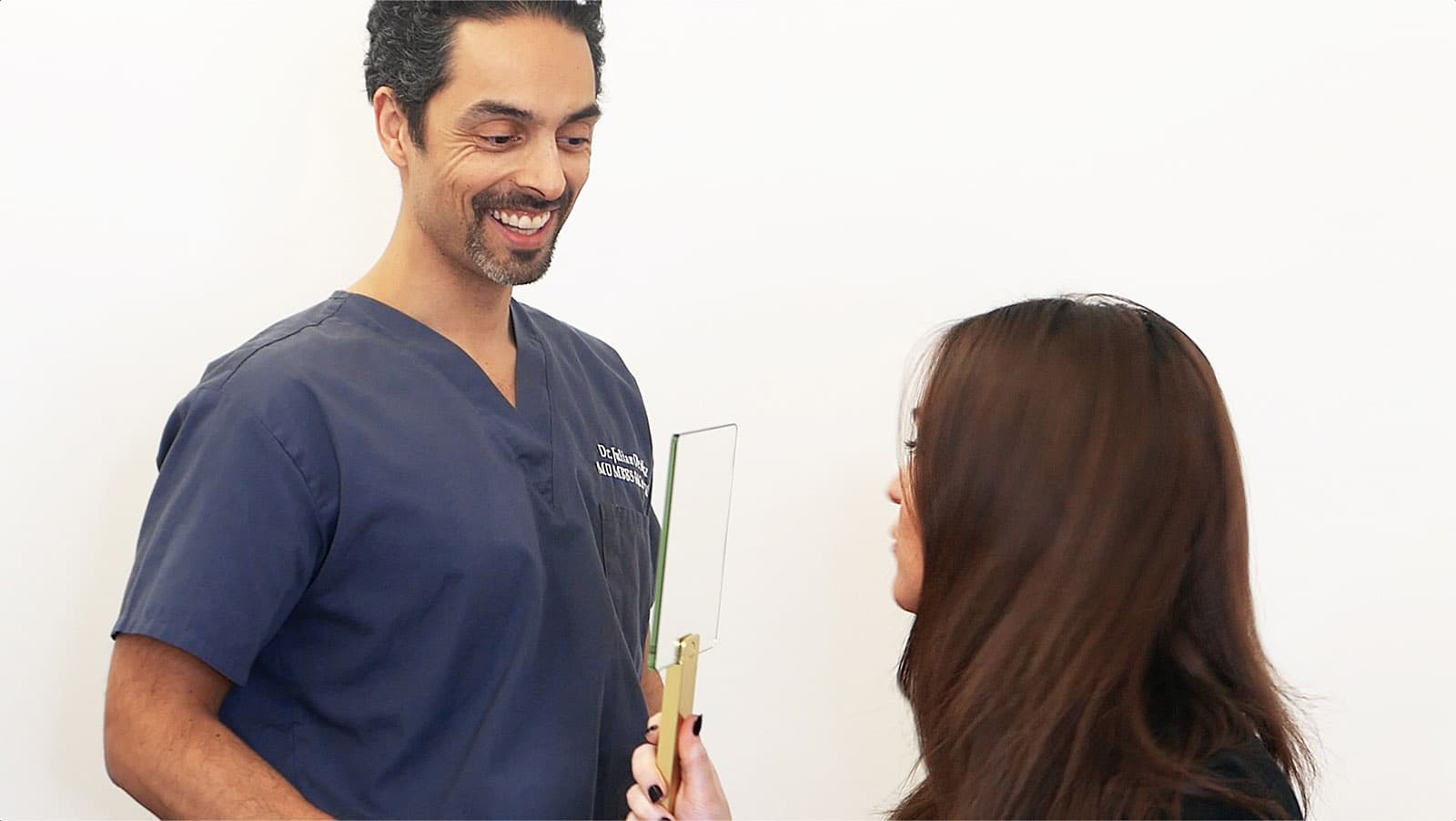
Understanding the Risks
While minimally invasive with significantly shorter recovery than a traditional technique, this remains surgery. All potential risks are discussed in detail at consultation. These include:
- Bruising and swelling – normal and expected, typically resolving within two weeks
- Infection – rare, managed with appropriate post-operative care
- Scarring – incisions are positioned within the hairline; this scarless facelift approach means marks are not visible even when hair is worn up once fully healed
- Asymmetry – some natural variation in healing is normal; significant asymmetry is rare
- Temporary changes in sensation around incision sites, typically resolving within weeks to months
- Result longevity – typically lasting five to eight years. Individual results vary and are discussed honestly at consultation.
Combining the Ponytail Lift With Other Procedures
For patients in their 30s and 40s, this approach is frequently combined with complementary procedures to achieve a more complete, harmonious result while remaining within the minimally invasive principle.

Upper Face
- Blepharoplasty – addresses upper eyelid hooding that often accompanies early mid-face descent
- Brow lift – where brow position contributes to a tired appearance

Mid-Face
- Fat transfer – restores volume alongside the structural lift
- Skin resurfacing (CO₂ laser or Morpheus8) – improves skin texture and fine lines

When More Is Needed
If your concerns extend to significant jowling, loose neck skin, or more advanced facial ageing, Dr De Silva will recommend a more comprehensive approach at consultation.
Book a Ponytail Facelift Consultation at Our Harley Street Practice
If you are considering a ponytail facelift in London and would like to understand whether this procedure is right for your face and your goals, we invite you to schedule a consultation with Dr Julian De Silva at 23 Harley Street. Virtual consultations are also available for patients travelling from outside London or from overseas.

Dr. Julian De Silva is a renowned facial cosmetic surgeon at Harley Street, London, specializing in facelift, blepharoplasty, and rhinoplasty. Known for natural-looking results, he has treated top celebrities and uses advanced technology for fast recovery. Dr. De Silva is also a recognized author and educator in aesthetic surgery.
Ponytail Facelift FAQs
How does a ponytail facelift differ from a traditional facelift?
How does a ponytail facelift differ from a traditional facelift?
A ponytail lift uses small incisions hidden within the hairline to lift and reposition the mid-face and temples, and is suited to earlier stage ageing in patients in their 30s and 40s. A traditional facelift addresses the lower face, jowls and neck at a deeper structural level, and is appropriate for more significant ageing changes. Results from the ponytail technique typically last three to five years, compared with ten or more from a deep plane procedure. Dr De Silva will advise at consultation which approach is genuinely right for your anatomy.
Will the scars be visible when wearing my hair up?
Will the scars be visible when wearing my hair up?
Incisions are placed entirely within the hairline in carefully concealed positions. Once fully healed, they remain hidden even when hair is worn up or pulled back. Dr De Silva uses ARTISS fibrin tissue glue to support optimal wound healing and minimise any evidence of surgery at the incision sites.
Is the ponytail facelift suitable for patients in their 30s?
Is the ponytail facelift suitable for patients in their 30s?
Yes. The technique is specifically designed for patients in their 30s to late 40s with early signs of mid-face and temple ageing. What matters is not age alone but the specific changes present and whether this approach is the right match for your goals. Dr De Silva will assess this honestly at consultation.
How long do results last?
How long do results last?
Results typically last five to eight years, though individual outcomes vary depending on skin quality, genetics, lifestyle and sun exposure. For patients in their 30s and 40s, this is often the right first step, with the understanding that a more comprehensive approach may be appropriate in later years.
What anaesthetic is used, and will I need a general anaesthetic?
What anaesthetic is used, and will I need a general anaesthetic?
The ponytail facelift is performed under Dr De Silva's patented Rapid Recovery Twilight Sedation (RRTS, UK Patent GB2602123B) rather than general anaesthesia. Patients are relaxed and comfortable throughout, breathe independently, and wake quickly and clearly. Most are ready to leave the clinic within an hour of surgery completing. In a clinical audit, patients rated their sedation experience an average of 9.4 out of 10, and fewer than one percent experienced nausea afterward. For patients considering surgery for the first time, the absence of general anaesthetic is often a significant reassurance.
What is the recovery like, and how much time will I need off work?
What is the recovery like, and how much time will I need off work?
Recovery from a ponytail facelift is considerably faster than from a traditional technique. Most patients experience mild swelling and bruising in the first week, which settles progressively over the following few days. Most feel comfortable returning to light work and social activities within five to seven days, with the initial result visible by the end of week two. Full results are visible at three to six months as the deeper tissues settle and the lift refines naturally. Dr De Silva provides personalised aftercare guidance for every patient and is available throughout the recovery period.
Can the ponytail facelift be combined with other procedures?
Can the ponytail facelift be combined with other procedures?
Yes, and for many patients a combined approach produces the most complete and harmonious result. The ponytail lift is frequently performed alongside upper or lower blepharoplasty, fat transfer to restore mid-face and temple volume, and CO₂ laser resurfacing or Morpheus8 to improve skin quality and texture. Because the ponytail lift alone does not address volume loss or skin quality, combining it with complementary treatments often produces a more rounded outcome with longer-lasting results. All decisions to combine are based on what is clinically appropriate for your anatomy and are discussed in detail at consultation.
What results should I realistically expect?
What results should I realistically expect?
A ponytail facelift produces a natural, refreshed lift of the mid-face and temples; the result should look like you on a very good day, not like someone who has had surgery. It restores the open, lifted quality of the upper face that gradually softens from the mid-30s onwards. It does not address significant jowling, neck laxity or more advanced ageing changes. Patients with these concerns will achieve a better results from a more comprehensive approach, and Dr De Silva will always state this honestly during consultation.
I have had non-surgical treatments before. Can I still have a ponytail facelift?
I have had non-surgical treatments before. Can I still have a ponytail facelift?
Yes. Previous non-surgical treatments such as fillers, radiofrequency or thread lifts do not preclude the ponytail facelift, though the history of any treatments is important information to share at consultation. Where significant filler has been used over a long period, Dr De Silva will assess whether this affects the tissue and plan accordingly. The consultation is always the right place to discuss your full aesthetic history openly and without judgement.
How do I know whether I need a ponytail facelift or the VFR7 deep plane facelift?
How do I know whether I need a ponytail facelift or the VFR7 deep plane facelift?
The decision depends entirely on the degree of change present and what you are genuinely trying to achieve. The ponytail lift is suited to patients in their 30s and 40s with early mid-face and temple descent and good skin elasticity. The VFR7 deep plane technique is appropriate for patients with more significant jowling, neck laxity or descended mid-face tissue that a smaller procedure cannot meaningfully address. There is no single right answer for every patient. Dr De Silva assesses each face individually at consultation and will recommend the approach that is genuinely right for your anatomy, including recommending a smaller procedure when that is the honest answer.